Beyond the Blue Recycling Bin
Every day, we buy, use, and discard, rarely stopping to ask: Where does it all go?
Behind every package and product lies a chain of production, consumption, and disposal that connects us to the planet in ways we often ignore.
This is not just about recycling. It’s about rethinking our relationship with the material world — learning to refuse what we don’t need, reduce what we consume, reuse what still has life, and finally, recycle what remains.
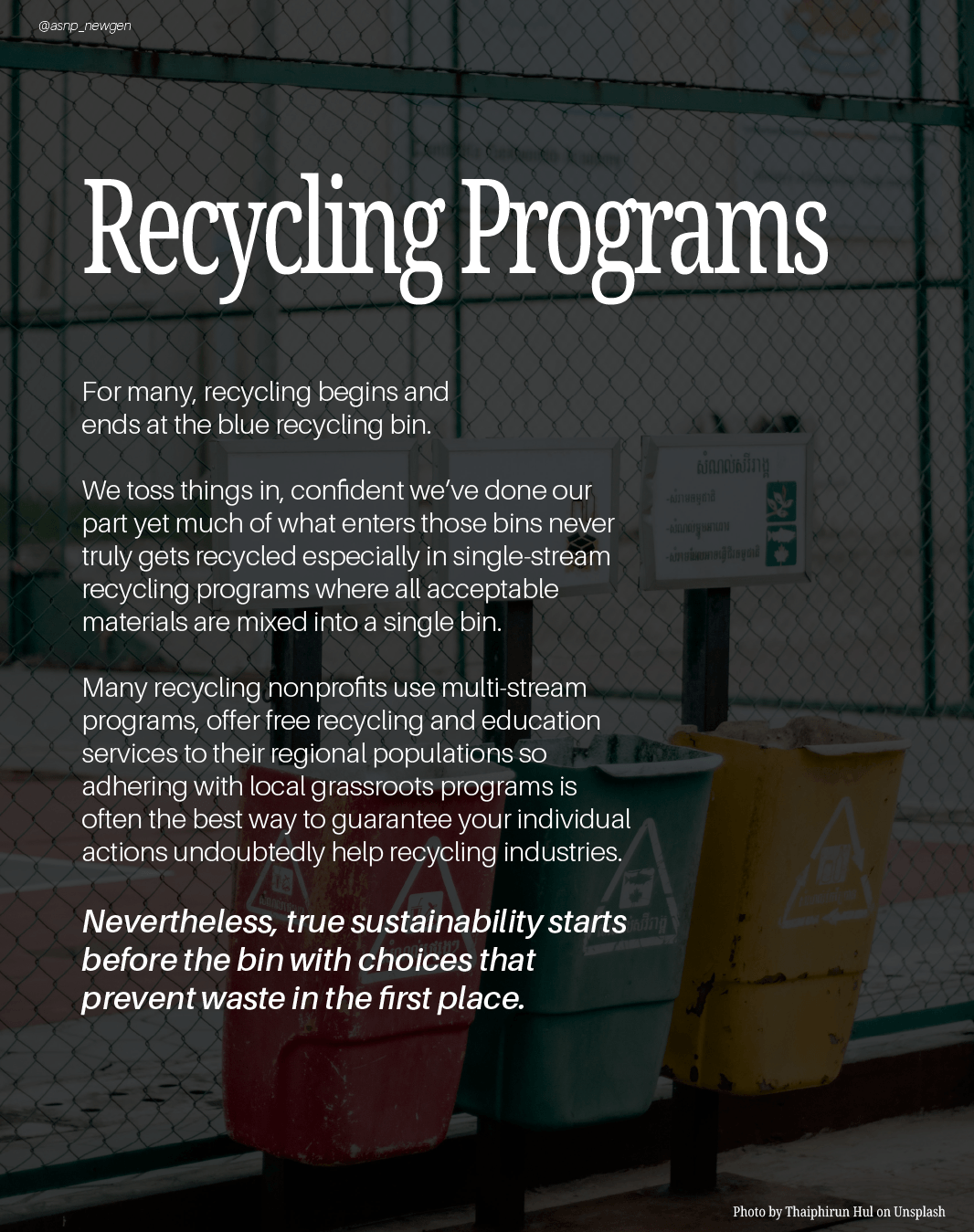
Recycling Programs
For many, recycling begins and ends at the blue recycling bin.
We toss things in, confident we’ve done our part yet much of what enters those bins never truly gets recycled especially in single-stream recycling programs where all acceptable materials are mixed into a single bin.
Many recycling nonprofits use multi-stream programs, offer free recycling and education services to their regional populations so adhering with local grassroots programs is often the best way to guarantee your individual actions undoubtedly help recycling industries.
Nevertheless, true sustainability starts before the bin with choices that prevent waste in the first place.
Steps That Matter
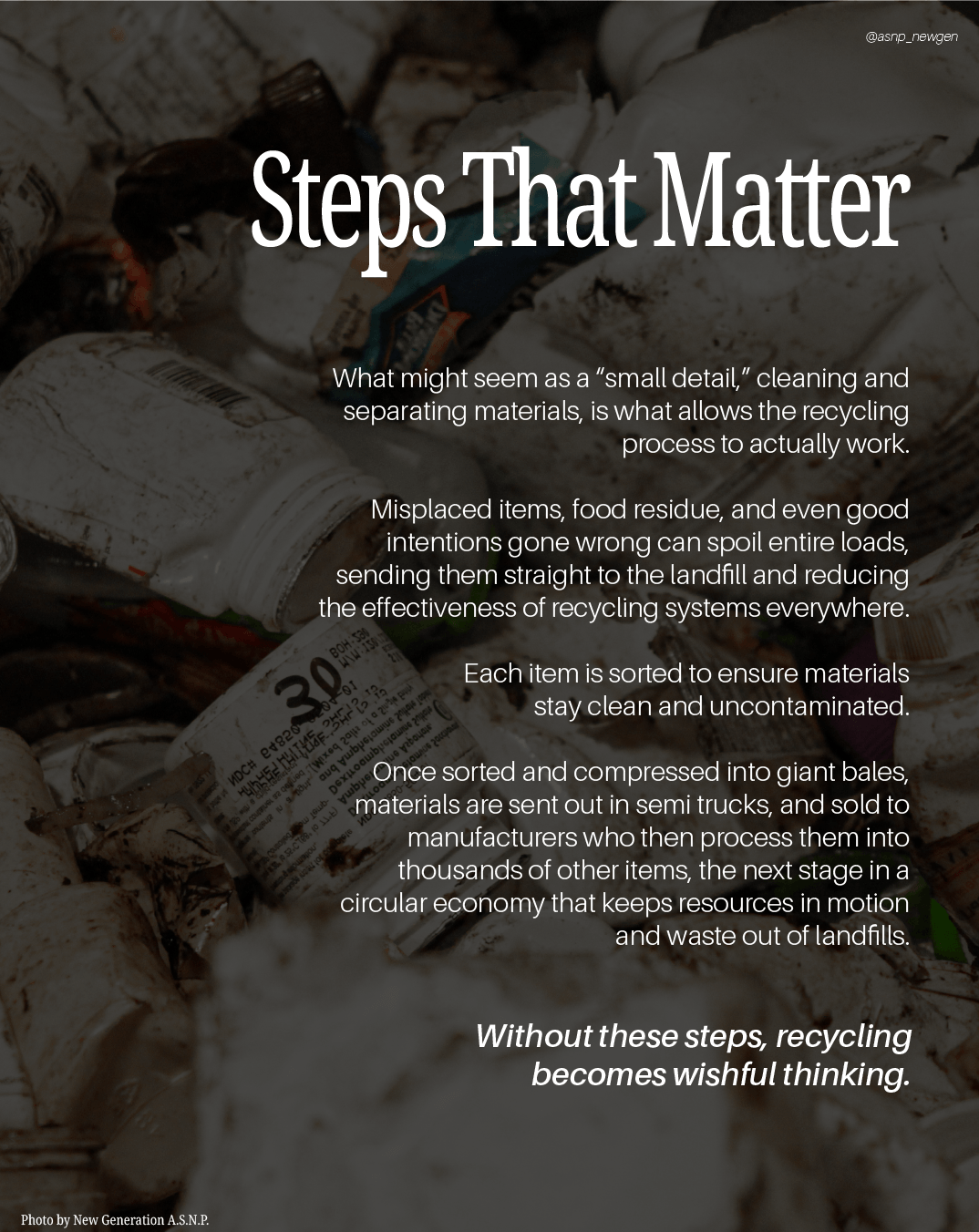
What might seem as a “small detail,” cleaning and separating materials, is what allows the recycling process to actually work.
Misplaced items, food residue, and even good intentions gone wrong can spoil entire loads, sending them straight to the landfill and reducing the effectiveness of recycling systems everywhere.
Each item is sorted to ensure materials stay clean and uncontaminated.
Once sorted and compressed into giant bales, materials are sent out in semi trucks, and sold to manufacturers who then process them into thousands of other items, the next stage in a circular economy that keeps resources in motion and waste out of landfills.
Without these steps, recycling becomes wishful thinking.
Re-Processing
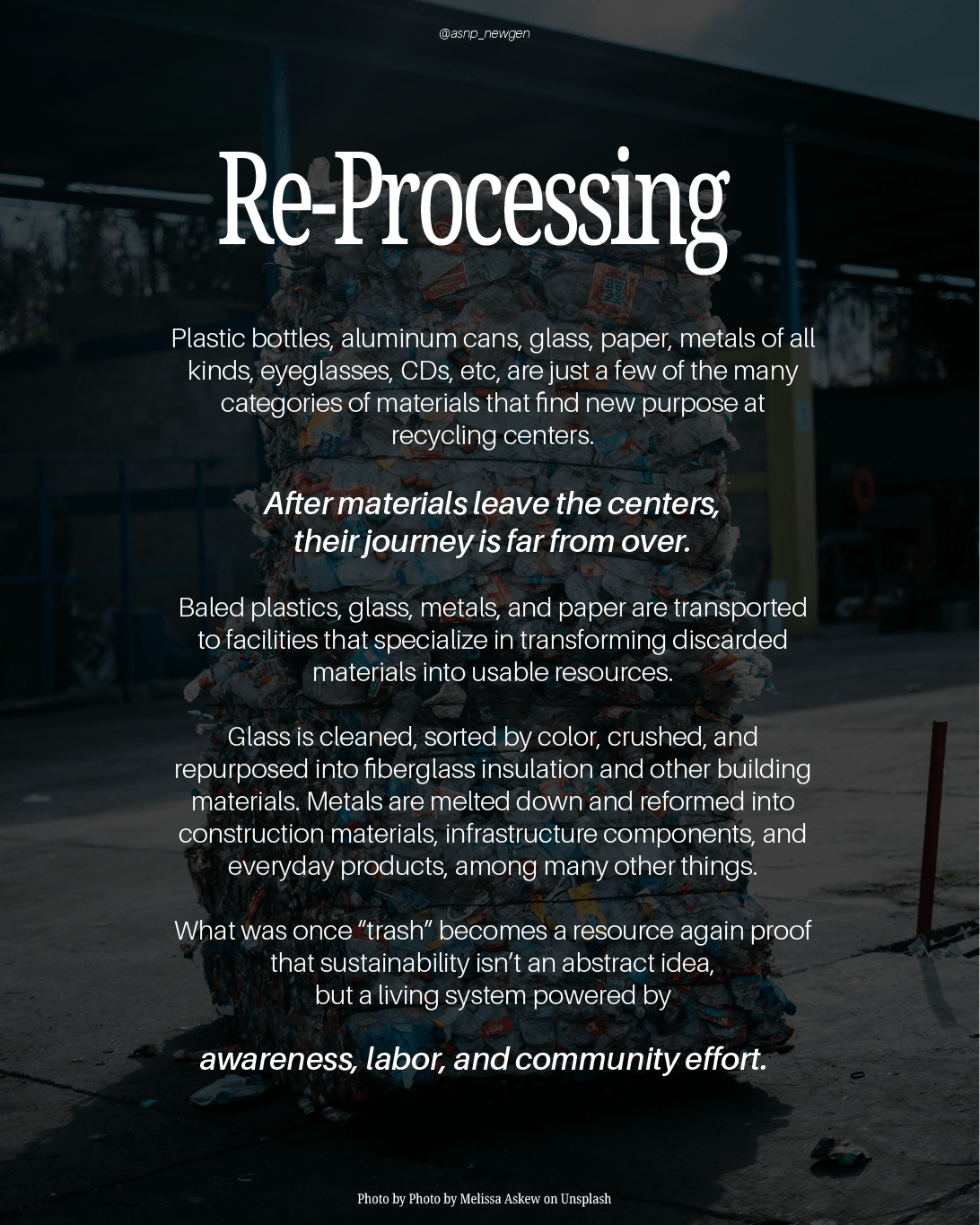
Plastic bottles, aluminum cans, glass, paper, metals of all kinds, eyeglasses, CDs, etc, are just a few of the many categories of materials that find new purpose at recycling centers.
After materials leave the centers, their journey is far from over.
Baled plastics, glass, metals, and paper are transported to facilities that specialize in transforming discarded materials into usable resources.
Glass is cleaned, sorted by color, crushed, and repurposed into fiberglass insulation and other building materials. Metals are melted down and reformed into construction materials, infrastructure components, and everyday products.
What was once “trash” becomes a resource again proof that sustainability isn’t an abstract idea, but a living system powered by awareness, labor, and community effort.
The Four R’s
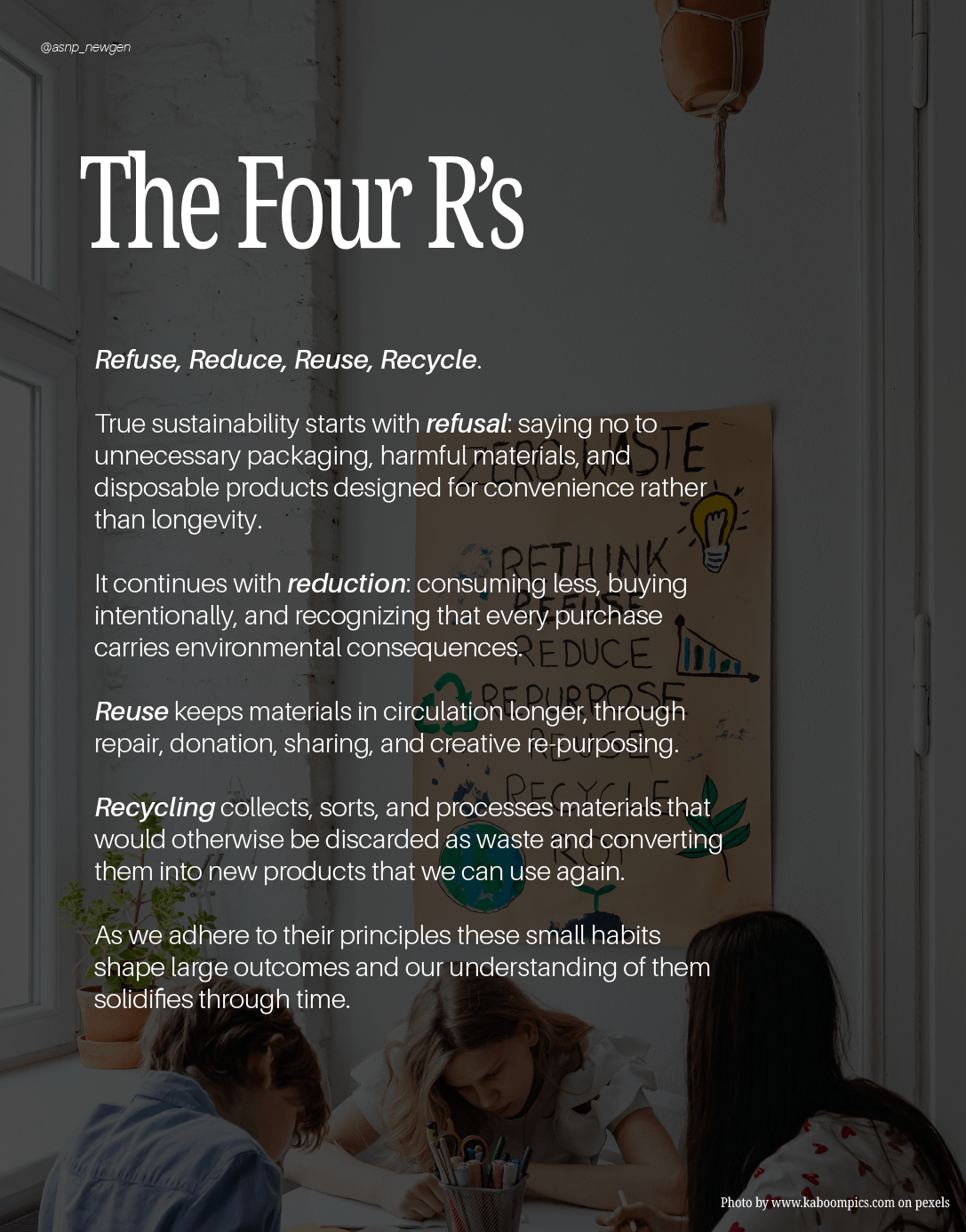
Refuse, Reduce, Reuse, Recycle.
True sustainability starts with refusal: saying no to unnecessary packaging, harmful materials, and disposable products designed for convenience rather than longevity.
It continues with reduction: consuming less, buying intentionally, and recognizing that every purchase carries environmental consequences.
Reuse keeps materials in circulation longer, through repair, donation, sharing, and creative repurposing.
Recycling collects, sorts, and processes materials that would otherwise be discarded as waste and converting them into new products that we can use again.
As we adhere to their principles these small habits shape large outcomes and our understanding of them solidifies through time.
Resource Conservation
Recycled materials dramatically reduce energy use and environmental damage; Aluminum made from recycled content requires up to ninety percent less energy than producing it from raw ore.
Steel, copper, paper, and glass all conserve water, reduce emissions, and preserve natural landscapes when recycled responsibly.
In fact, most of the aluminum and steel we use today has already lived a previous life.
Recycling not only delays waste, it extends the usefulness of materials that would otherwise require new mining, drilling, or deforestation.
But not all materials are created equal. Some plastics, especially those labeled #3, #6, and #7 lack viable recycling markets, pose health risks, and are often better refused altogether.
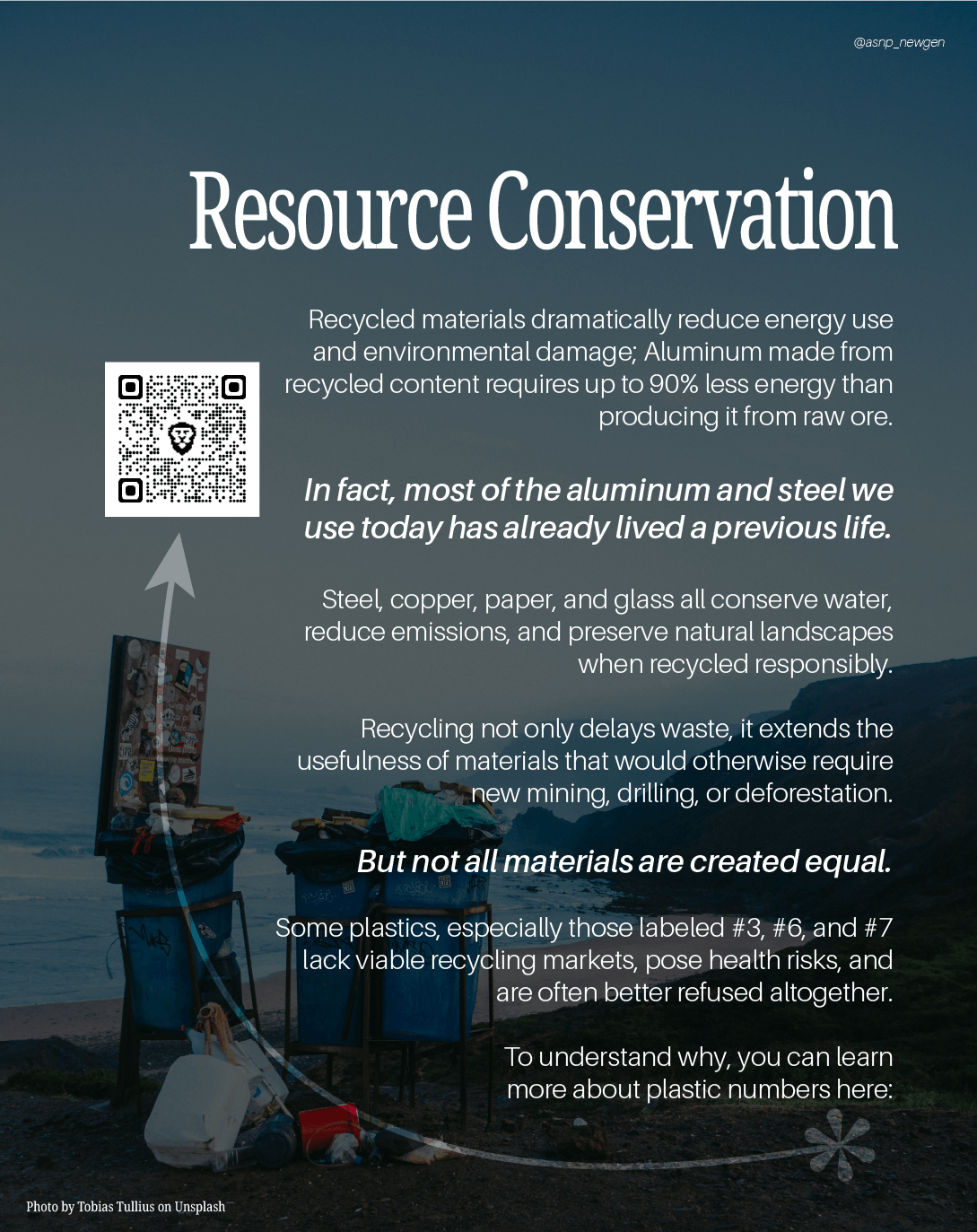
To understand why, you can learn more about plastic numbers here:
https://www.recycleannarbor.org/knowledge-base/plastics-explained
Sustainability Beyond the Bin
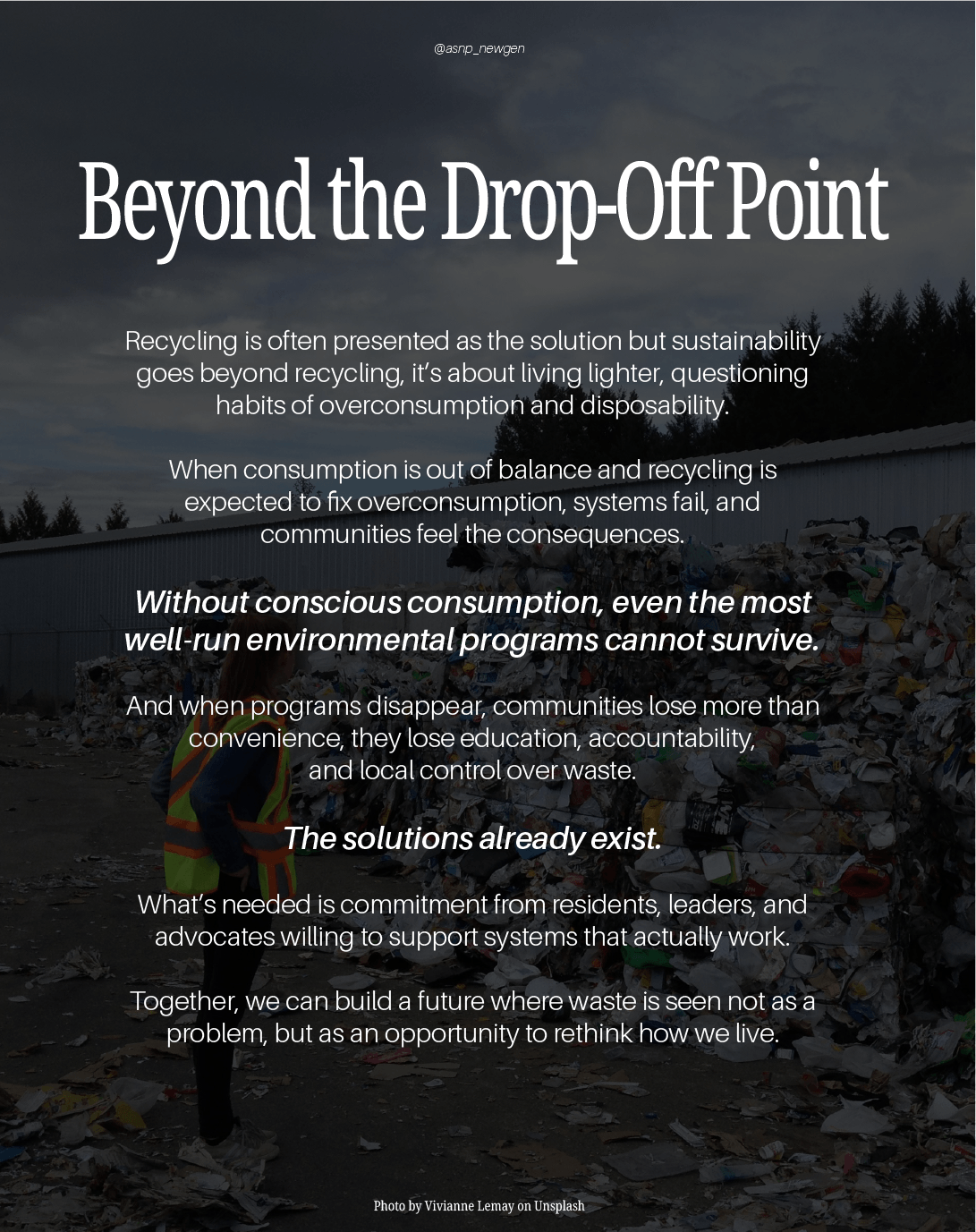
Recycling is often presented as the solution but sustainability goes beyond recycling, it’s about living lighter, questioning habits of overconsumption and disposability.
When consumption is out of balance and recycling is expected to fix overconsumption, systems fail, and communities feel the consequences.
Without conscious consumption, even the most well-run environmental programs cannot survive.
And when programs disappear, communities lose more than convenience, they lose education, accountability, and local control over waste.
The solutions already exist.
What’s needed is commitment from residents, leaders, and advocates willing to support systems that actually work. Together, we can build a future where waste is seen not as a problem, but as an opportunity to rethink how we live.
Shared Legacy
Caring for the planet is not a task for a few.
When we refuse unnecessary packaging, reduce consumption, and reuse what we can, recycling becomes part of a larger story: one of mindfulness, where we choose responsibility over convenience, and effort over disposability.
Each choice; to refuse, reduce, reuse, and recycle is a small act of defiance against waste, and a gesture of hope for the future.
Community recycling programs invite you to join this mission: Volunteer. Donate. Educate. Participate
Because when we act together, we turn waste into renewal — and hope into action.
References:
“Environmental Factoids” WasteWise | US EPA, 30 Apr. 2016, archive.epa.gov/epawaste/conserve/smm/wastewise/web/html/factoid.html.
“Infinitely Recyclable” The Aluminum Association. www.aluminum.org/Recycling.
Koerth, Maggie. “The Era of Easy Recycling May Be Coming to an End.” FiveThirtyEight, 10 Jan. 2019, fivethirtyeight.com/features/the-era-of-easy-recycling-may-be-coming-to-an-end.
“Plastics Explained.” Recycle Ann Arbor, www.recycleannarbor.org/knowledge-base/plastics-explained.
“Sorting Out Recycling Programs: Which Ones Work Best?” AP News, 22 May 2019, apnews.com/article/03b30b847b5a4a1eb0cd7e34eacba861.
Streur, Jacq, and Deborah Kapiloff. “Dual Stream vs. Single Stream Recycling.” Institute for Local Self-Reliance, 22 Aug. 2019, ilsr.org/articles/dual-stream-vs-single-stream-recycling.
Team, Okon. “Understanding the Environmental Impact of Metal Waste” Okon Recycling, 5 Apr. 2025, www.okonrecycling.com/industrial-scrap-metal-recycling/steel-and-aluminum/environmental-impact-of-metal-waste.
Team, Okon. “What Are Free Recycling Programs for Communities?” Okon Recycling, 15 June 2025, www.okonrecycling.com/consumer-recycling-initiatives/learn-about-recycling/free-recycling-programs-for-communities.
Utah State University. “Facts and Figures | Recycling Center.” Facilities | USU, www.usu.edu/facilities/recycling/facts-and-figures.