Ongoing conflict (RSF vs SAF)
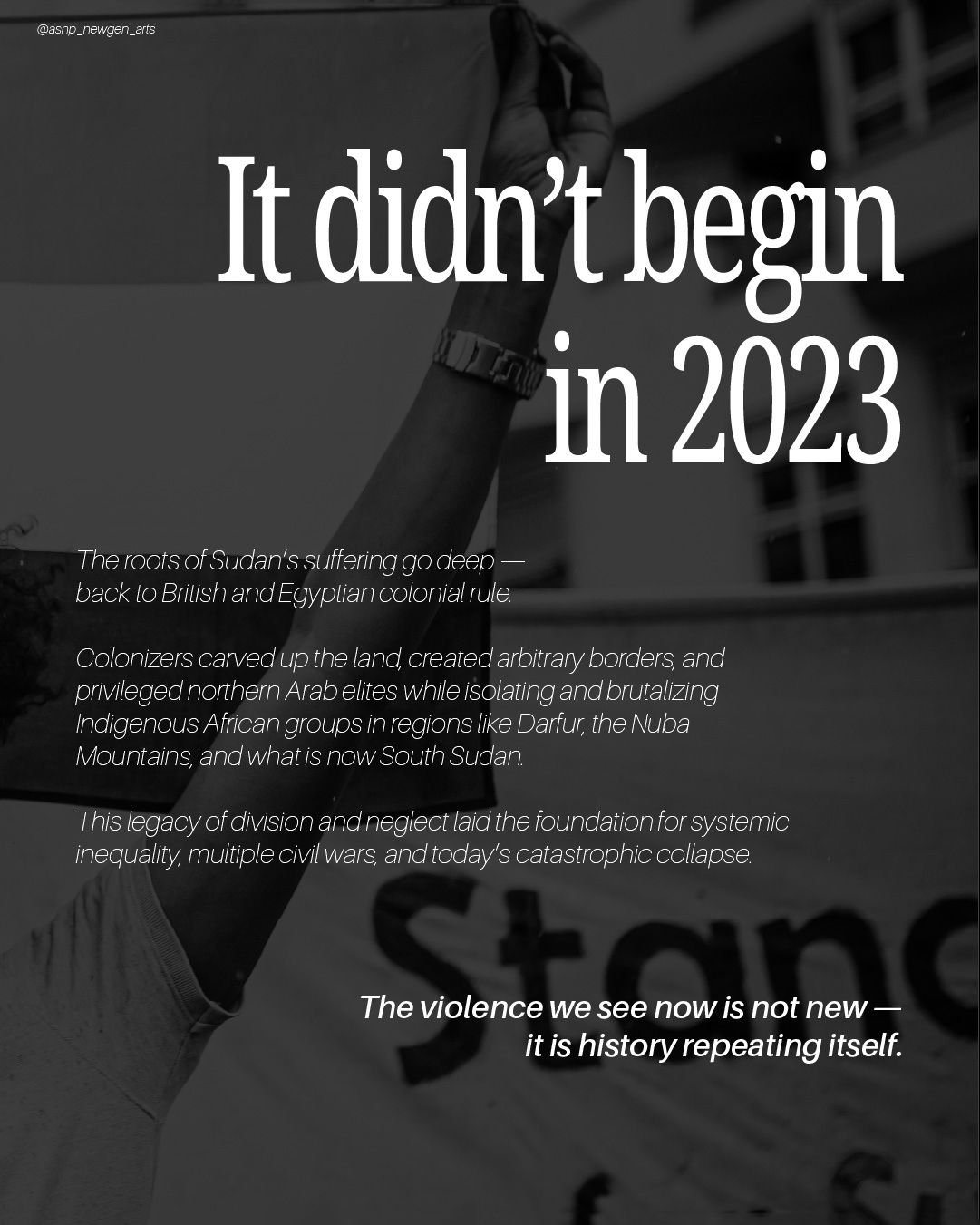
Sudan's crisis didn’t start last year. It began decades ago — under British and Egyptian rule — where colonial powers divided people by ethnicity and region, privileging some groups over others, particularly in Darfur and South Sudan.
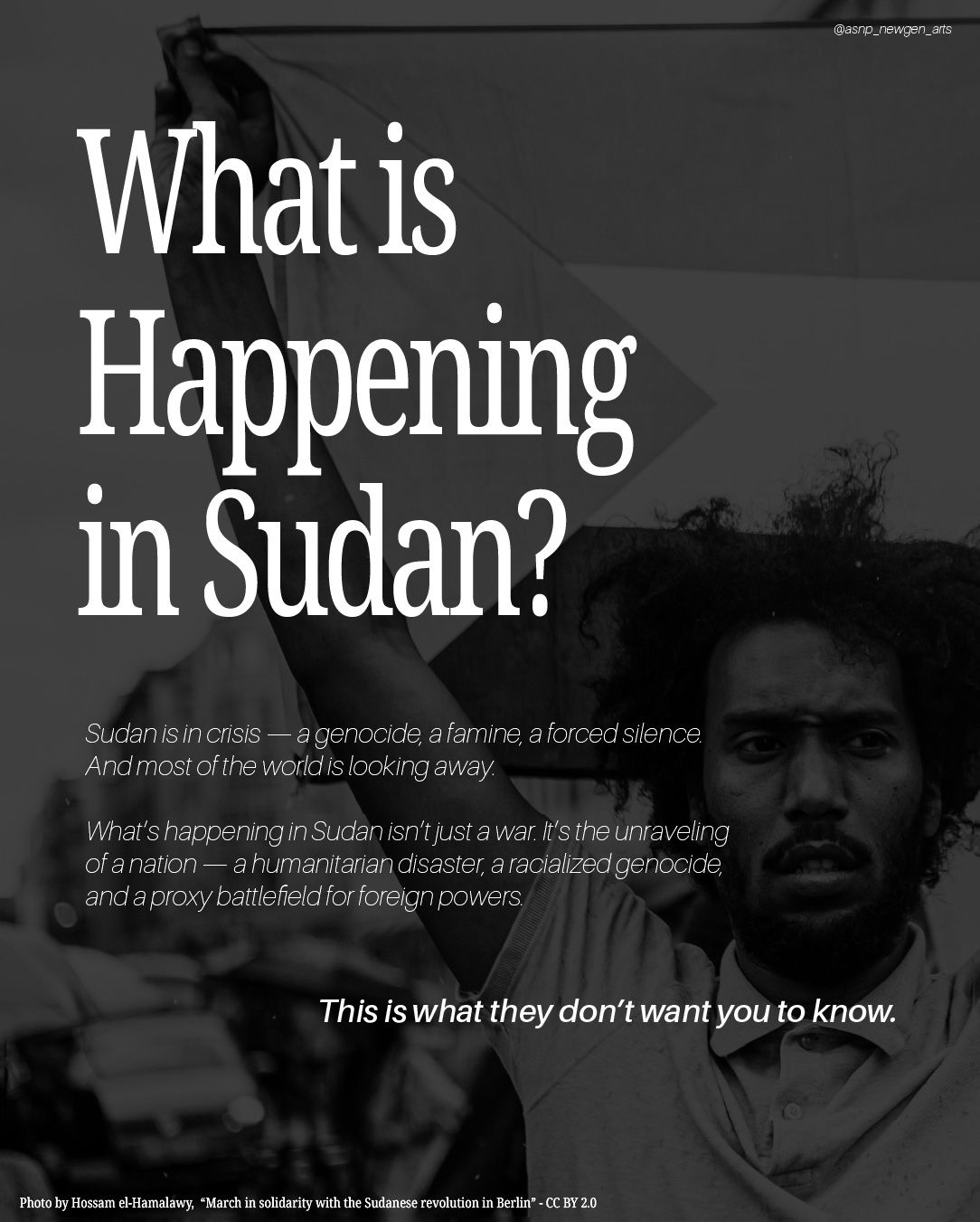
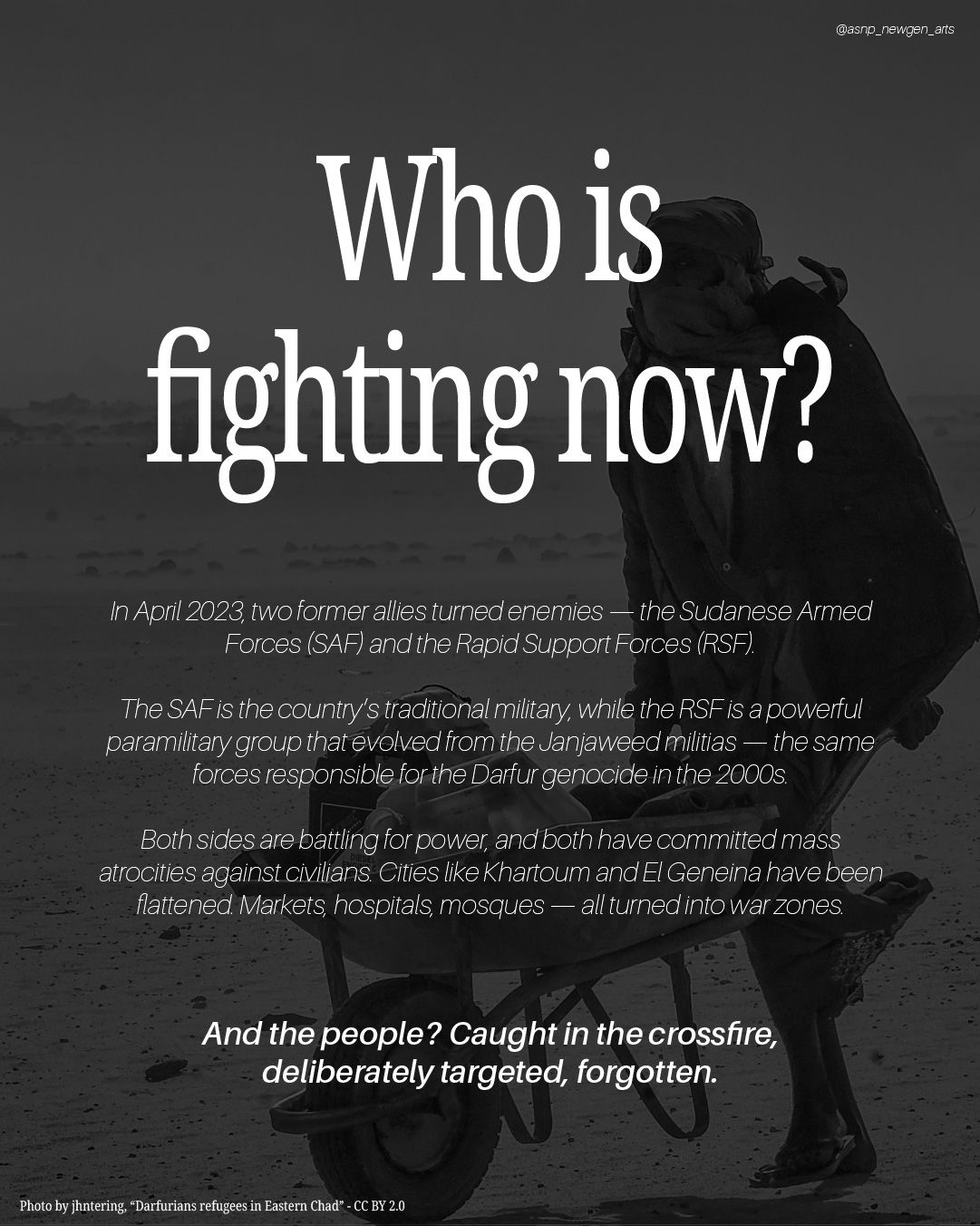
It’s more than a humanitarian crisis, or a civil war. This is a proxy war, a genocide, created and sustained by the powerful nations of the world who profit off violence. Two armies are now fighting for control. Both sides are attacking civilians. Entire cities have been wiped out. But who is really behind what is now labeled as the worst humanitarian crisis in modern times?
Ethnic violence in Darfur
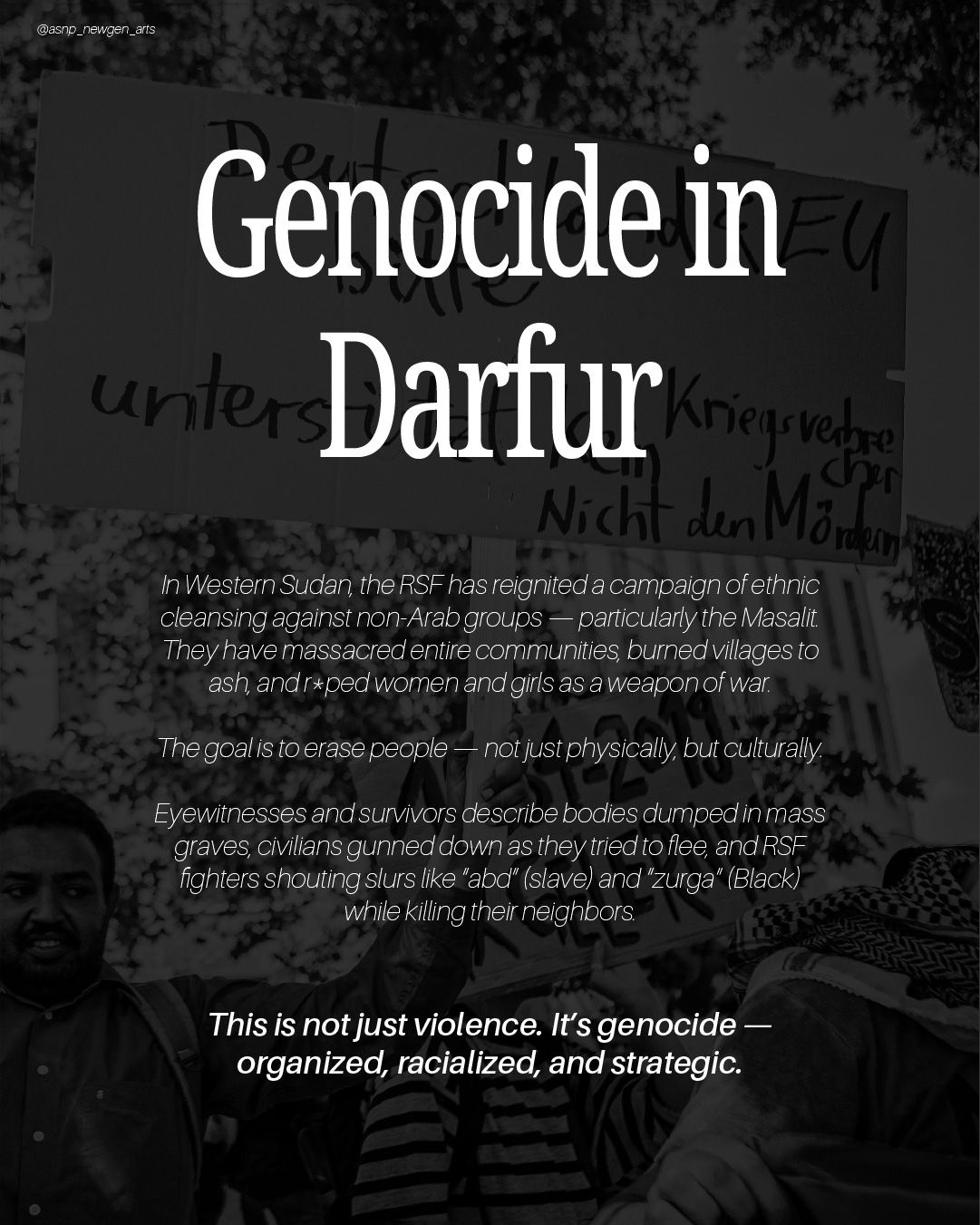
In western Sudan, Arab militias called the Janjaweed, backed by the Sudanese government, targeted non-Arab ethnic groups, affecting over 300,000 people and displacing millions by looting, burning of villages, massacres of civilians and targeted sexual violence.
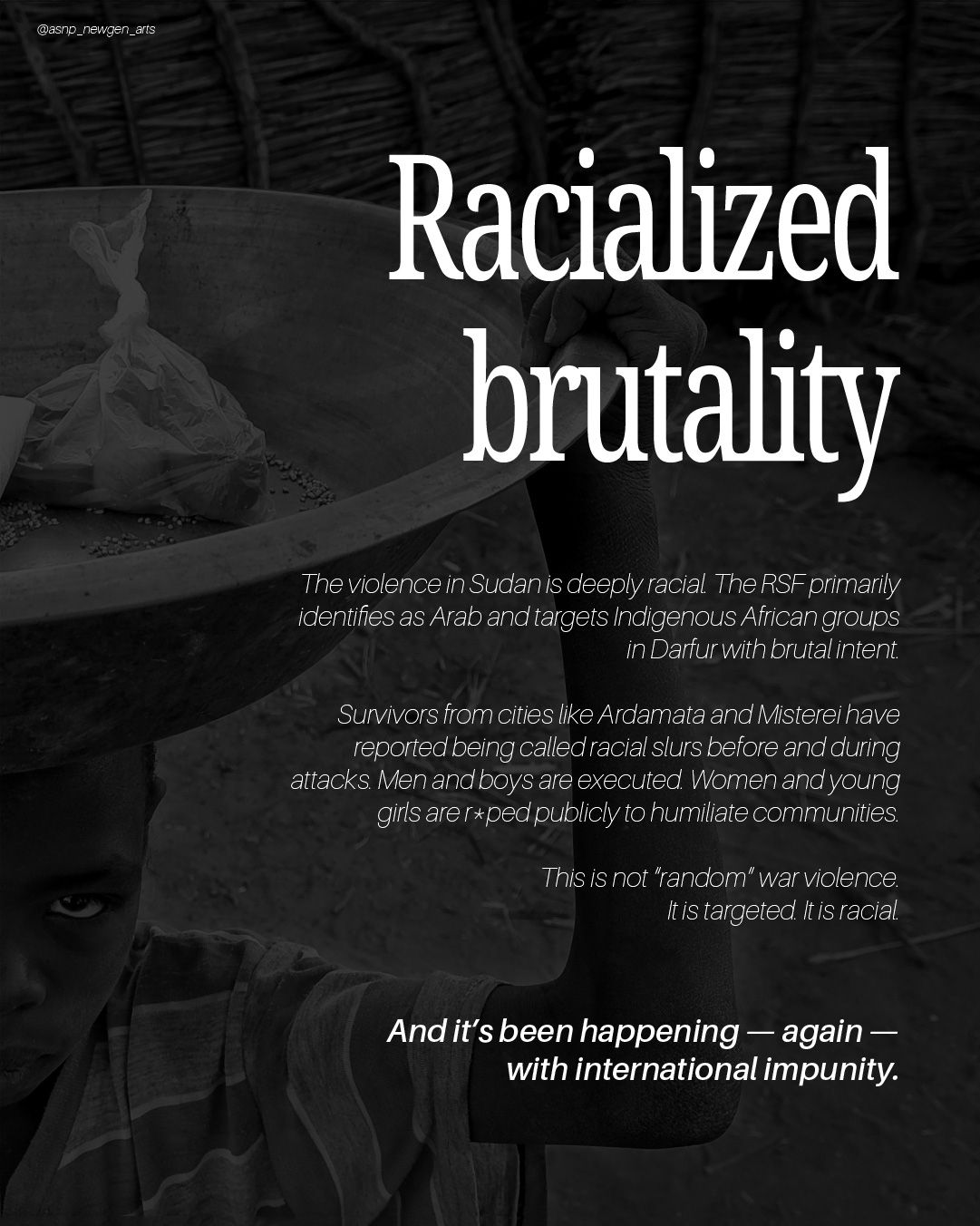
This is ethnic violence: Sexual and gender-based violence such as rape and gang-rape has become a norm for the RSP, largely targeting non Arab women and young girl as a war strategy to maintain vulnerable communities submissive in the aim to “prevent’ rebellion, on the other hand the massacre of men and boys and the sexual atrocities delivered to many show systematic targeting from the RSF to specific ethnic groups and communities such as the Masalit, Ardamata, Misterei and other areas along the western and northern parts of the country.
Reports, particularly from Masalit survivors, have been documented where the RSF use racist and derogatory slurs such as “abd” (slave), “nuba” (African of non-Arab ancestry), “zurga” (non-arab group) all which are spit out with the intentions of dehumanizing and separating ethnic communities.
Displacement & refugee crisis
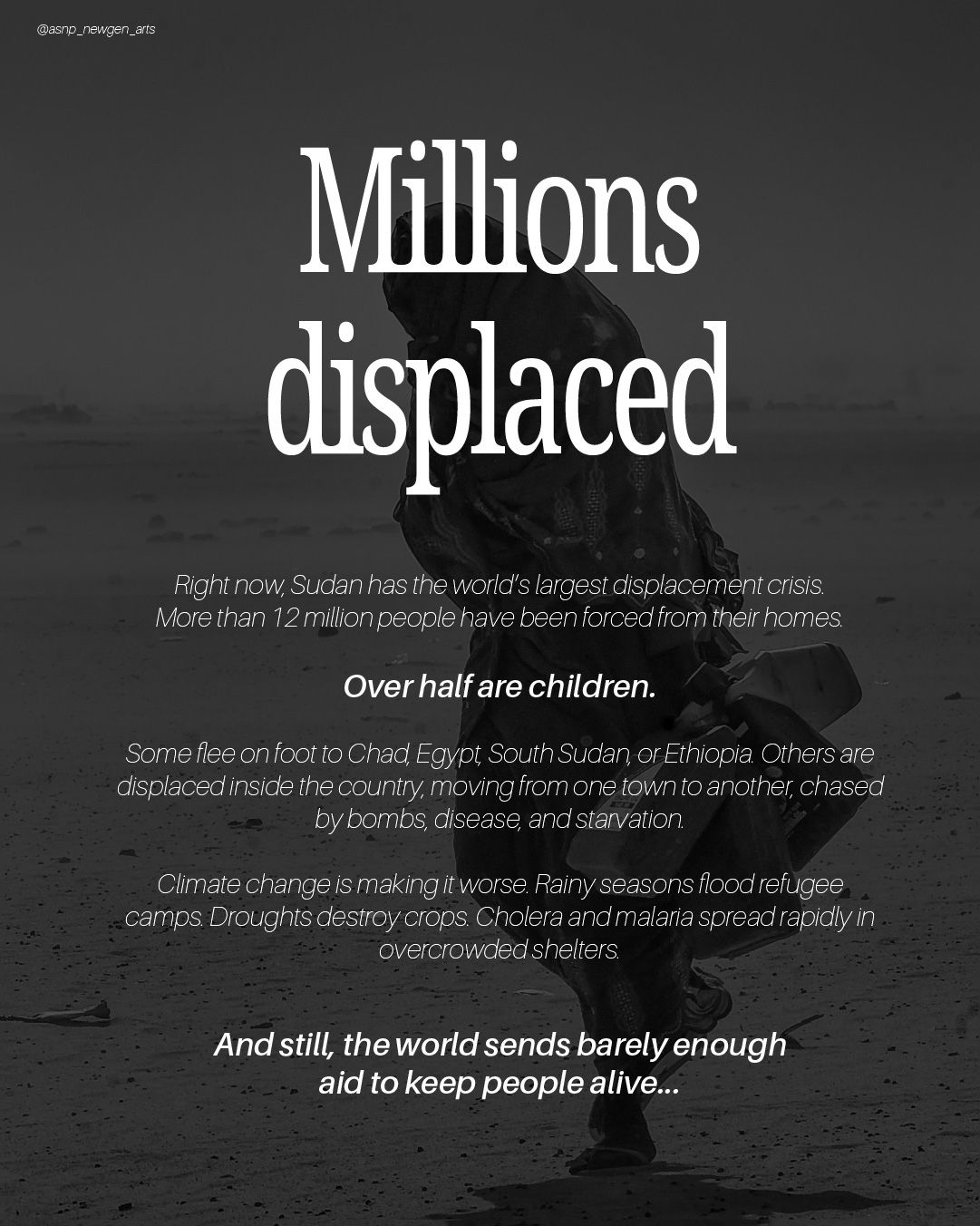
Over 8 million Sudanese have been internally displaced, over half of them being children and with about 3 million more fleeing Sudan and seeking refuge elsewhere yet due to climate change (created by our capitalist societies), floods and weather crises have forced displaced communities to relocate over and over and contributed to the outbreak of life-threatening diseases such as cholera.
As of 2025 many sources including UNHCR and the International Rescue Committee have confirmed there are over 12 millions Sudanese displaced refugees within and out of Sudan, many fleeing to the borders of the country and/ or out to countries nearby such as Chad, South Sudan, Egypt and Ethiopia.
Famine and economic collapse
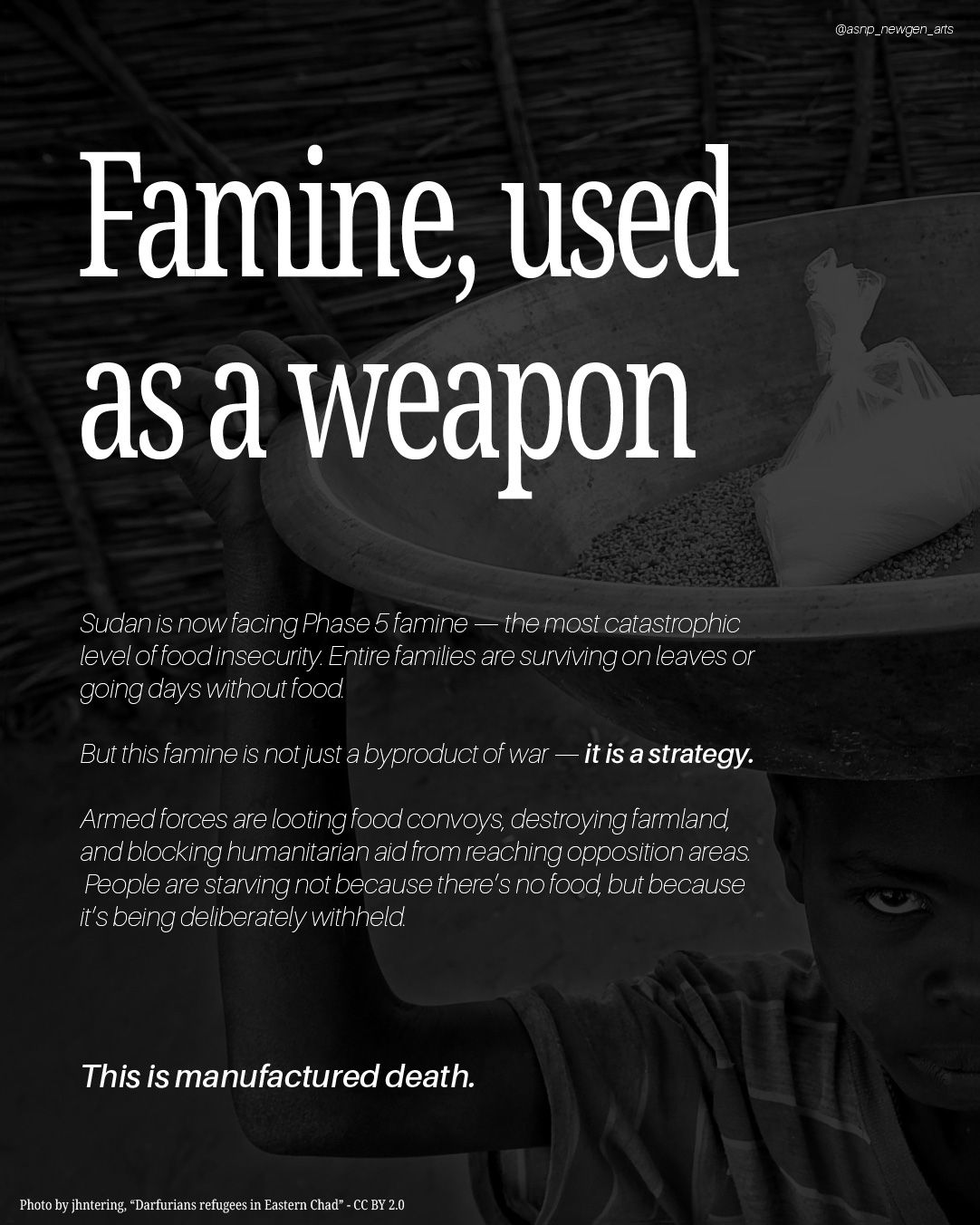
Due to the violence between the warring forces, the economic aspect of the country has been faced with hyperinflations, destruction of essential services and the collapse of important industries like the medical and agricultural systems causing a shortage of disease prevention treatments and food scarcity and as a result of the vast amount of refugees, aid centers have struggled to provide essential supplies to their refugees, causing a phase 5 famine, the most severe stage of food insecurity, in many locations since August 2024.
Both parties have contributed to the lack of humanitarian aid by attacking humanitarian workers, looting aid facilities, and impeding the delivery of essential supplies to communities that need it the most. All for the prevention of the contrary side to get aid, devastating millions of civilians.
Adding to it, the UAE and others have been accused of illicitly trading Sudanese gold, while many neighboring countries have been pointed at for supporting either force as a strategy for potential to gain regional influence and reshaping power dynamic risking the stability of the entire area.
Media Silence
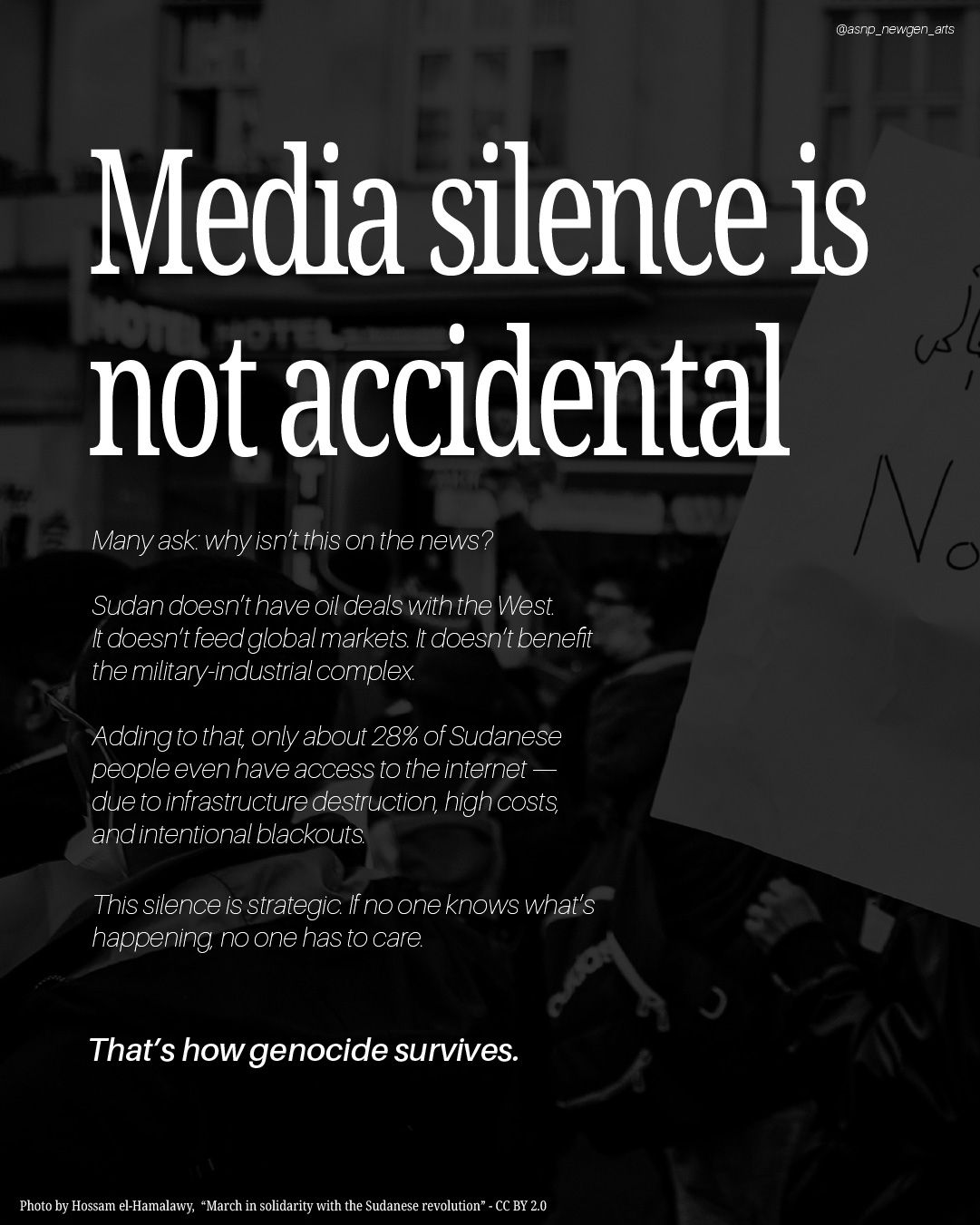
The world hears about the “Sudan crisis” but most don't fully understand what is really going on. This is not an accident; Sudan’s crisis doesn’t directly threaten Western civilization as the USA does not hold large value trade with Sudan making it less likely for western economics to put international pressure. Though the USA has condemned and sanctioned both forces, as long as other external powerful nations such as China, Russia, and the UAE, continue to supply weapons and technology to these armed forces, the people, our people, will continue to suffer and perish.
Their names go under the water due to the lack of platform for the Sudanese people; Compared to other marginalized communities such as Gaza with about 90% or Honduras with 66% of population’s access to the internet, only about 28% of the Sudanese population has access to these resources. This is due to the damages done to communication infrastructures, the skyrocketing fees associated with gaining access to it and the military tactics to control the information and suppress defiance silencing victims' voices.
Call to Action
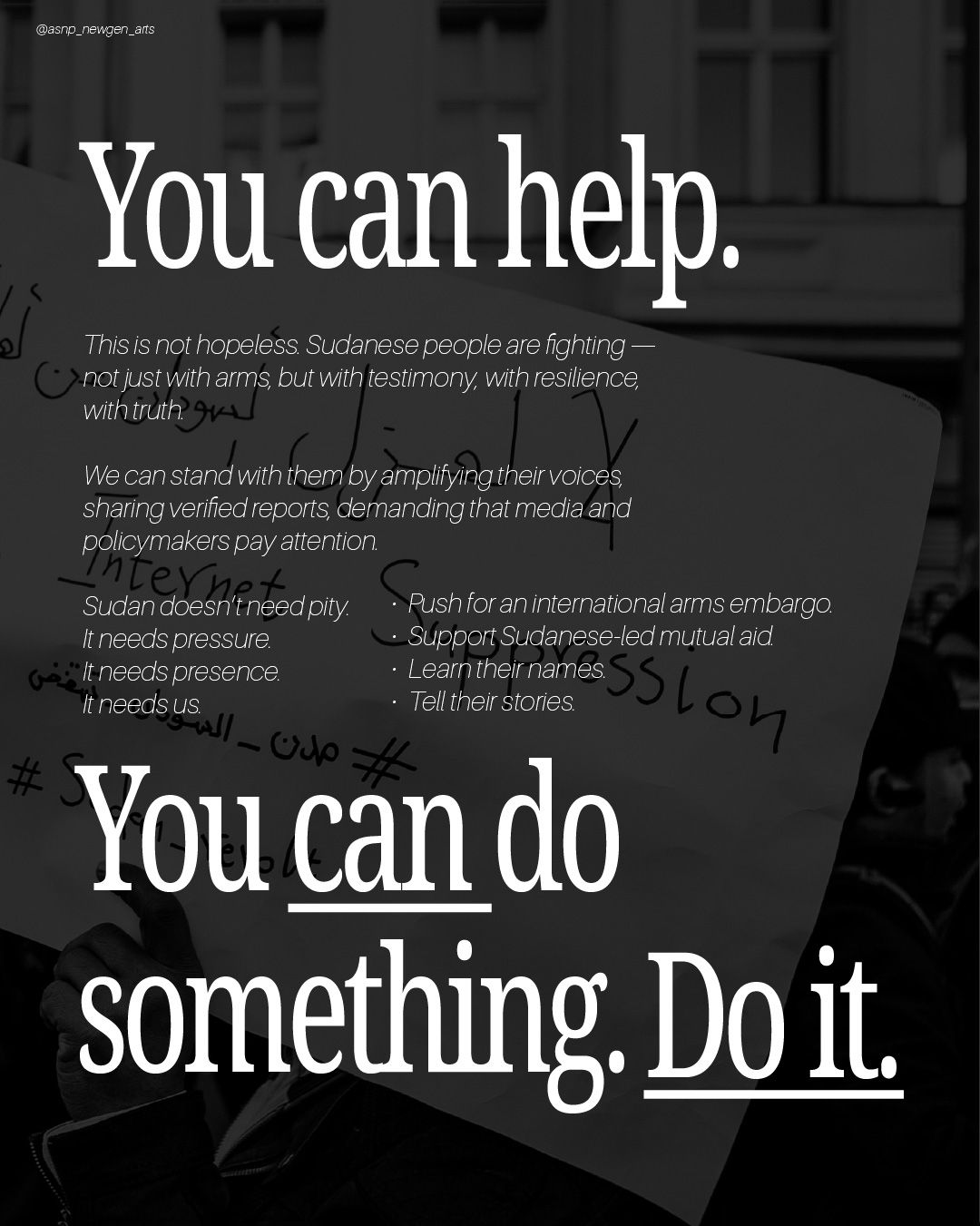
As we support all these other movements, we cannot forget the importance of advocating for those whose voices are being silenced. We must amplify their voices and make it known who is behind their suffering and why it still continues. External interests have permitted these atrocities to continue as far as it has. We, the people, must organize, call for an arms embargo and keep talking about Sudan.

References:
“Paramilitary Group Massacres Hundreds in Overlooked Humanitarian Crisis in Sudan”
Reports on RSF attacks in North Kordofan, with 300+ civilians killed. Offers context on the scale of famine and displacement (FDD).
“Sudan’s civil war, by the numbers” (Associated Press)
Clear snapshot: timelines, key regions (Khartoum, Darfur, etc.), disease, malnutrition, and infrastructure collapse (AP News, The Guardian).
“Sudan’s children face growing threat of deadly infectious diseases as vaccination rates halve” (The Guardian)
Focused deep dive into the erosion of healthcare, disease outbreak risks, and the toll on children (The Guardian, AP News).
“Aid groups warn of attacks on Sudan’s hospitals…” (AP News)
Covers attacks on health facilities, mass casualties, and displacement, with insights from MSF and Save the Children (AP News).
“Destruction and violence in Sudan” (Amnesty International)
Explains the hunger crisis, famine zones, and how violence has dismantled agriculture and aid chains (Amnesty International).
USA for UNHCR – “Sudan Crisis Explained”
Excellent data-driven explainer: nearly 13 million displaced, famine zones, regional refugee flows (unrefugees.org, AP News).
International Rescue Committee – “Crisis in Sudan: What is happening and how to help”
In-depth overview of humanitarian need, food insecurity, health collapse, plus aid interventions (Front page - US).
Council on Foreign Relations – “What Is the Extent of Sudan’s Humanitarian Crisis?”
Updated June 2025; breaks down causes, displacement stats, global responses, and regional implications (Council on Foreign Relations).
Concern Worldwide – “The crisis in Sudan, explained”
Contextualizes the war's evolution, famine emergence, levels of aid dependency, and displacement scale (concernusa.org, Council on Foreign Relations).
ReliefWeb – “Sudan Humanitarian Needs and Response Plan 2025”
Official UN/OCHA summary. Stats: 30M+ in need, funding gaps, priority sectors, and response breakdown (ReliefWeb).
Wikipedia – “Sudanese civil war (2023–present)”
Helpful timeline: April 2023 conflict origins, key factions (SAF vs RSF), alleged genocide, and the state of crisis (Wikipedia).
Wikipedia – “Humanitarian impact of the Sudanese civil war (2023–present)”
Focused section on displacement, starvation, disease, and the scale of humanitarian needs (Wikipedia).
Wikipedia – “War crimes during the Sudanese civil war (2023–present)”
Updated with international accountability: ICC investigations, genocide allegations, and war crime evidence (Wikipedia, FDD).