Our everyday actions have long-term consequences on the planet’s health, and our daily meals play an enormous role in either improving or harming the only home we have.
Emissions, Resource Use & Climate Mitigation:
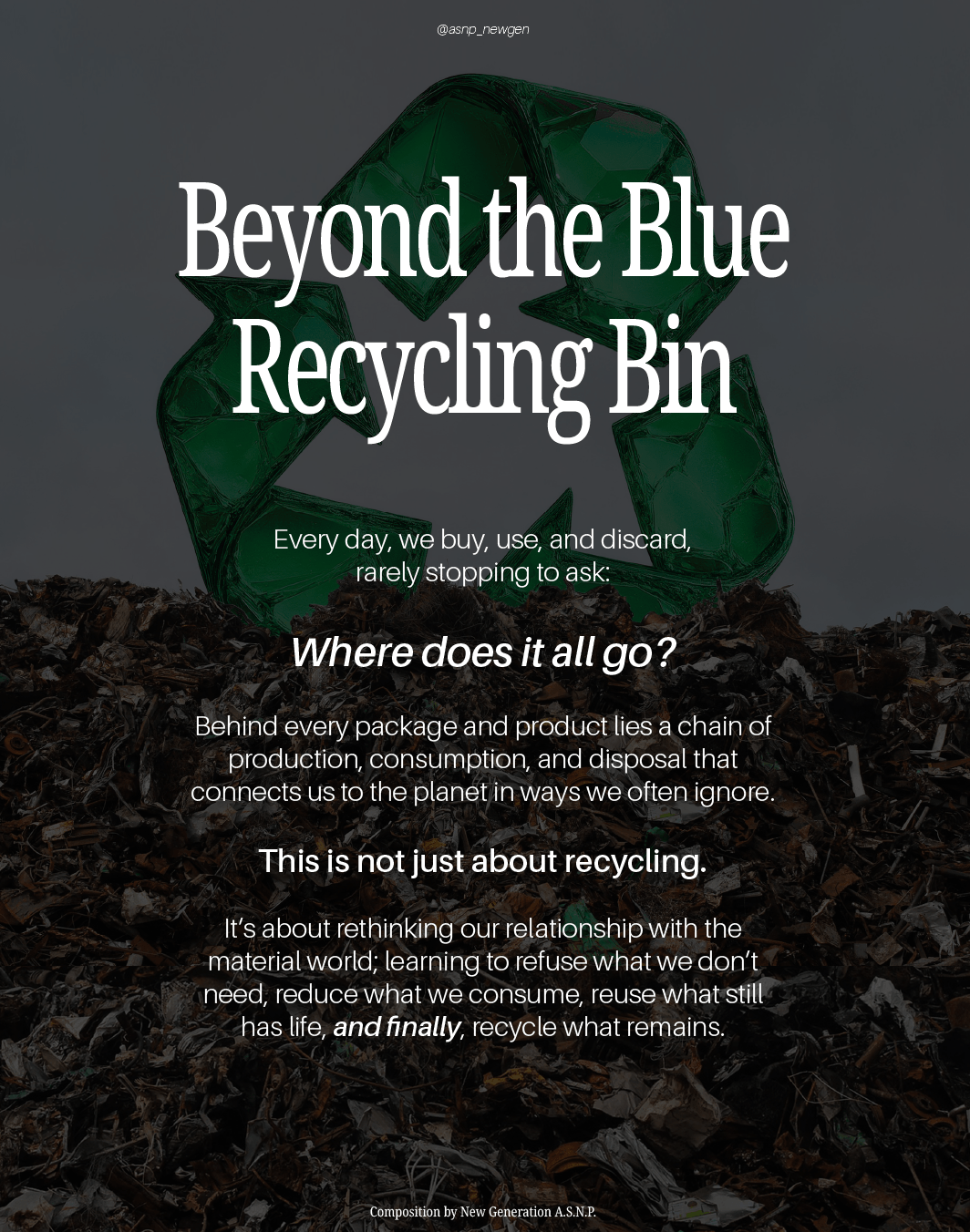
Climate mitigation refers to the actions taken to prevent or reduce greenhouse gas (GHG) emissions driving climate change. With this in mind, let’s look at some of the food industry’s largest contributions to the climate crisis, the impacts they have on our world, and how shifting to a plant-based diet can make a real difference. Veganism is often unfairly compared to recycling in terms of effectiveness for reducing carbon emissions. But this argument misrepresents the actual scale of impact individuals can have on the planet’s health. Recycling is a reaction—it manages the byproducts of consuming non-biodegradable goods. Even at its best, recycling offsets less than 3% of emissions, and it will never be enough as long as plastic production continues. Veganism, by contrast, is prevention. It directly reduces demand for animal products, targeting the root cause of some of the highest-emission industries. To put it simply: recycling helps clean up the mess, but veganism helps stop the mess from happening. Saying they’re equally impactful is like saying you could put strips of chicken back onto a bird after it’s gone through digestion—it’s nonsense.
All diet shifts—vegetarian, pescatarian, low-meat, or vegan—help lower GHG emissions. But two stand out. Vegan diets and pescatarian diets, as they use the least amount of water compared to other eating patterns. However, fishing disrupts the ocean’s ability to absorb CO₂, weakening one of our planet’s strongest natural climate regulators. Vegetarian diets, though often seen as eco-friendly, actually carry higher impacts than veganism because of dairy products. Even organic animal-based diets produce far higher emissions than non-organic vegan diets.
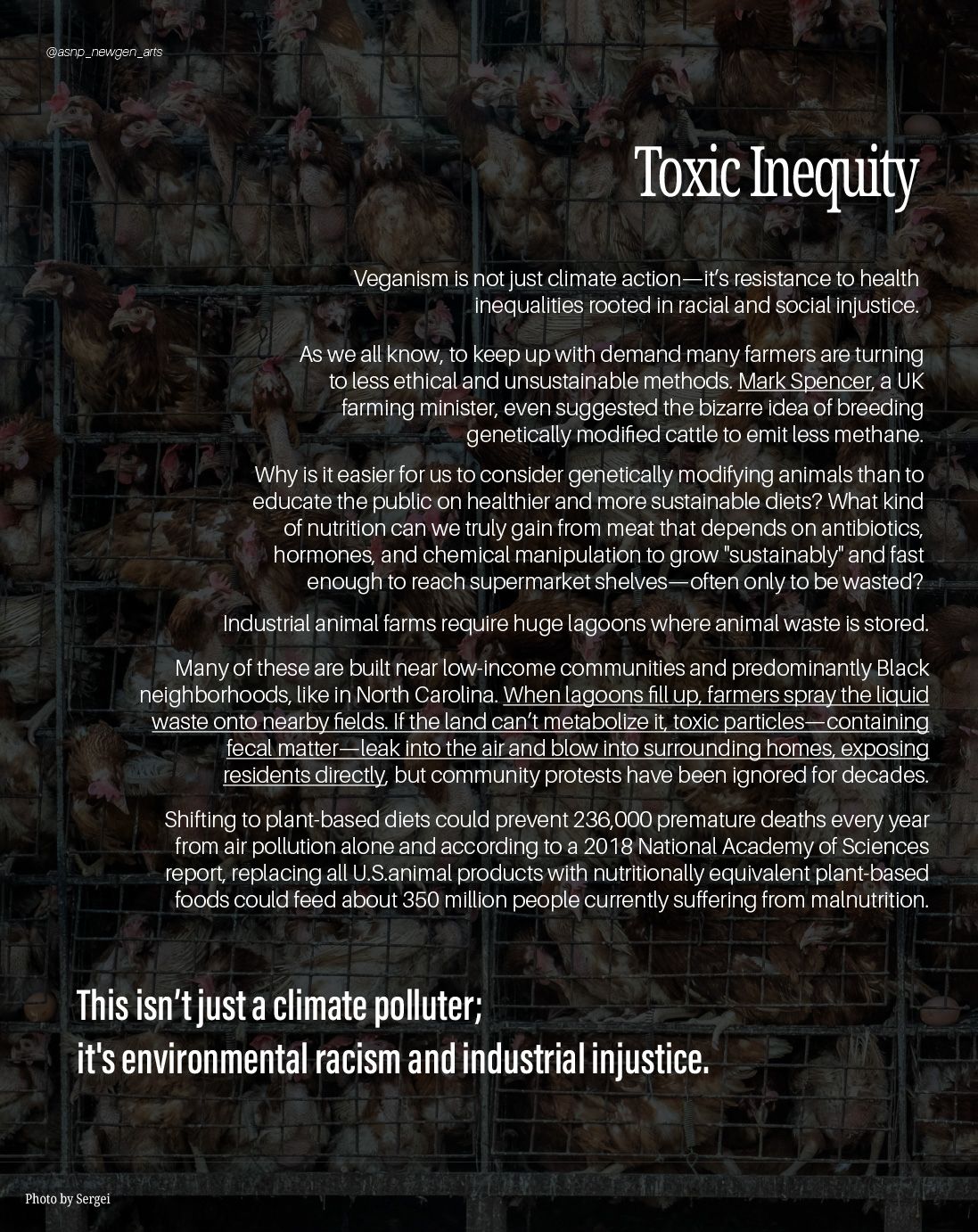
Another layer of this issue is social justice. Industrial animal farms require waste lagoons—huge pits where animal waste is stored. Many of these facilities are built near low-income communities and predominantly Black neighborhoods, like in North Carolina. When lagoons fill up, farmers spray the liquid waste onto nearby fields. If the land can’t metabolize it, toxic particles—containing fecal matter—leak into the air and blow into surrounding homes, exposing residents directly. This isn’t just a climate polluter; its environmental racism and community protests have been ignored for decades.
Shifting to plant-based diets wouldn’t just cut emissions—it could prevent 236,000 premature deaths every year from air pollution alone. And according to a 2018 National Academy of Sciences report, replacing all animal products in the U.S. with nutritionally equivalent plant-based foods could feed an additional 350 million people currently suffering from malnutrition. Veganism, then, is not just climate action—it’s resistance to health inequalities rooted in racial and social injustice.
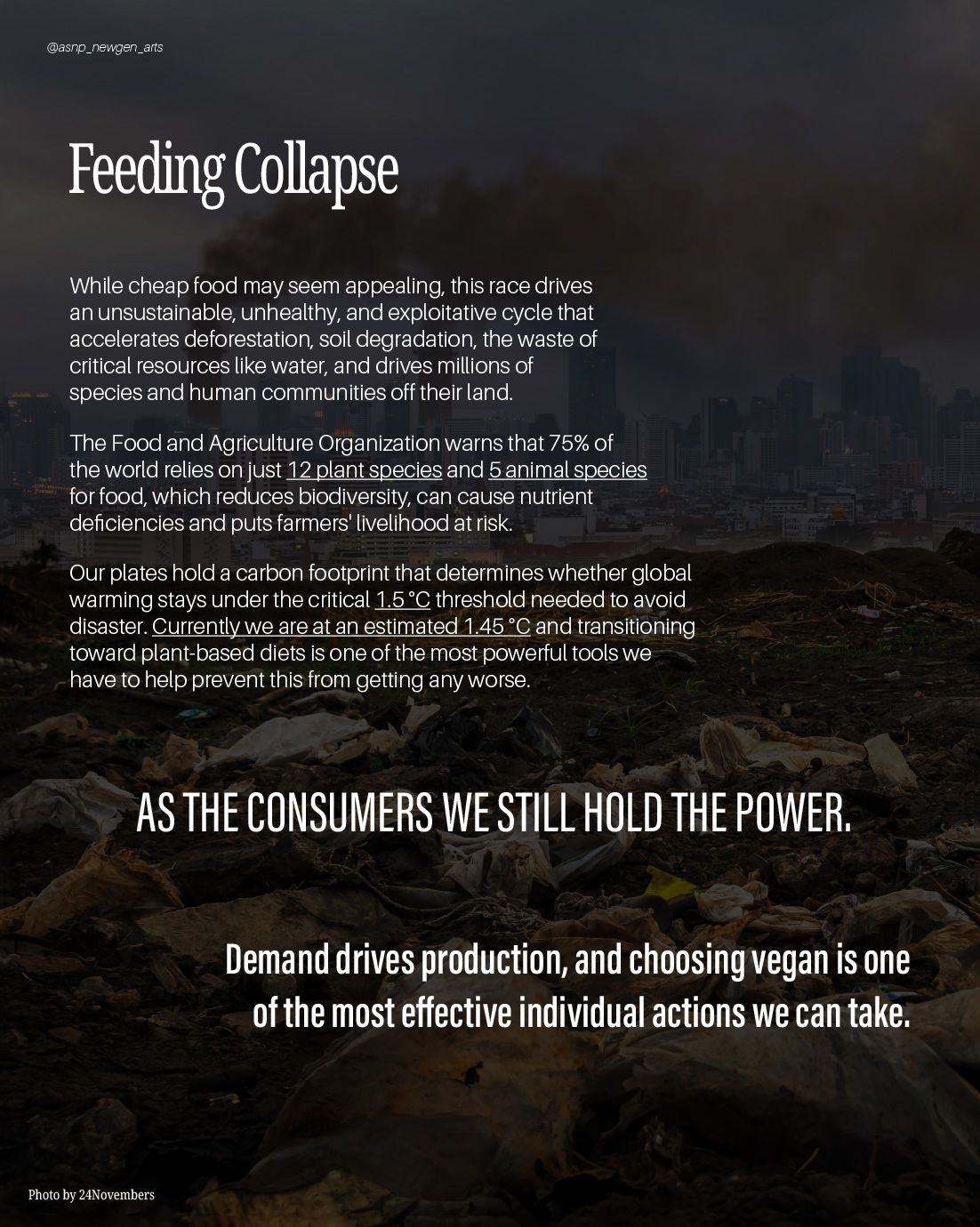
Animal agriculture contributes 15–20% of global GHG emissions. Moving toward plant-based diets could free up 76% of farmland currently devoted to livestock. In the U.S. alone, swapping beef for beans could free 42% of cropland, slash emissions by nearly half, and cut water use by up to 21%, according to the National Institutes of Health. Globally, replacing just half of animal-based foods with plant alternatives by 2050 could lower emissions by 31%. Evidence is overwhelming: in 97% of 140 countries studied in a 2020 *Global Environmental Change* report, vegan diets had the lowest GHG emissions per person. Our plates hold a carbon footprint that determines whether global warming stays under the critical 1.5 °C threshold needed to avoid disaster. If temperatures rise beyond 2 °C, humanity faces devastating consequences: extreme weather, rising seas, worsening droughts, and mass biodiversity collapse. Currently we are at an estimated 1.45 °C and transitioning toward plant-based diets is one of the most powerful tools we have to help prevent this from getting any worse.
Eating local can reduce food miles, but transport accounts for only a small fraction of food-related emissions. What matters far more is *how* the food is produced. A locally farmed steak has a larger footprint than imported beans. So when thinking about sustainability, the “how” of food production outweighs the “where”. While systemic policies—like climate education, carbon taxes on high-emission foods, and subsidies for sustainable farmers—will always have the greatest impact, we, the consumers, still hold the power. Demand drives production, and choosing vegan is one of the most effective and powerful individual actions we can take.
Biodiversity & Environmental Impact:
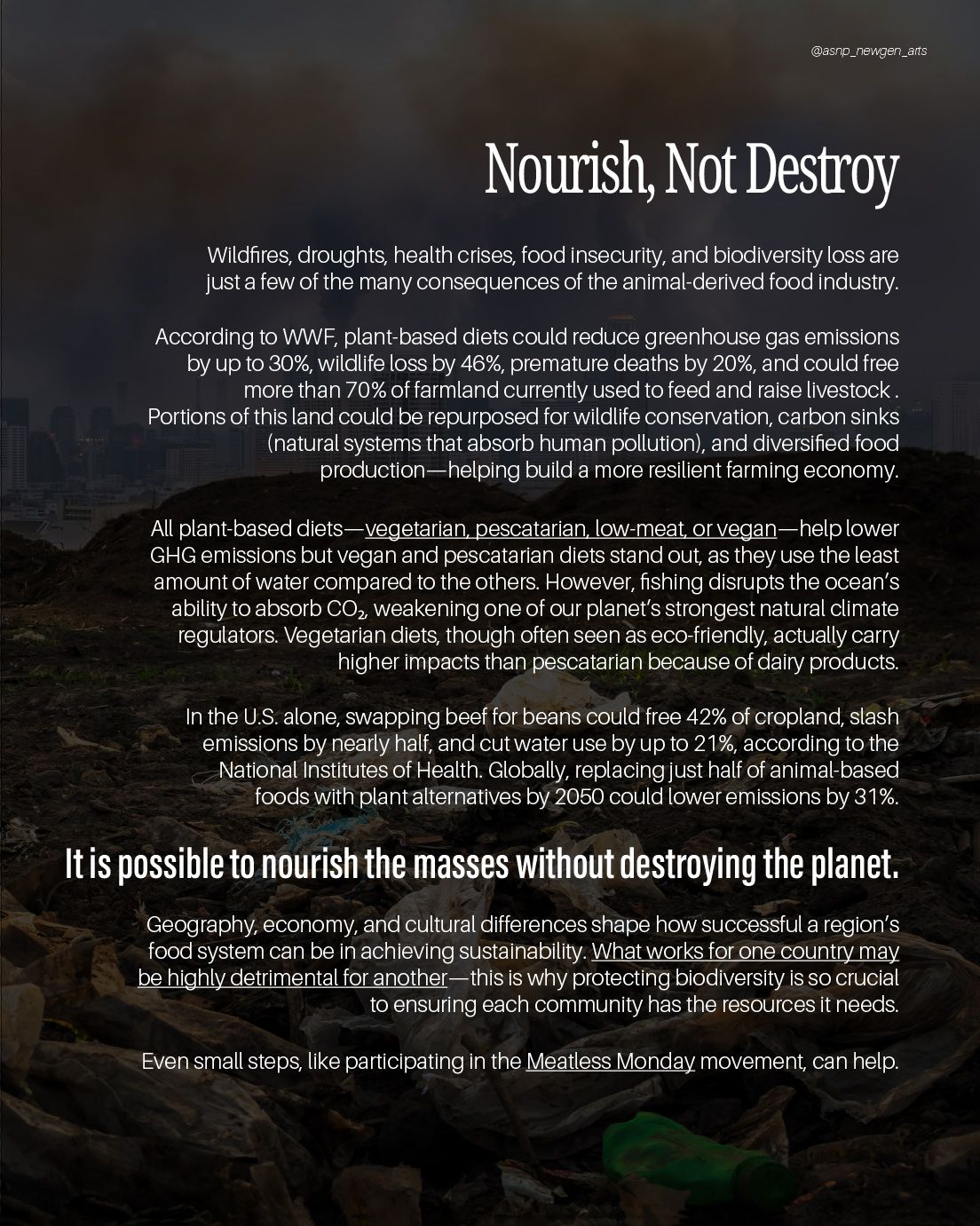
Studies from the University of Oxford show that even the most sustainable meat-based diets are still less sustainable than a standard vegan diet. At the same time, geography, economy, and cultural differences shape how successful a region’s food system can be in achieving sustainability. What works for one country may be highly detrimental for another—this is why protecting biodiversity is so crucial to ensuring each community has the resources it needs. Wildfires, droughts, health crises, food insecurity, and biodiversity loss are just a few of the many consequences of the animal-derived food industry.
Yet it is possible to nourish the masses without destroying the planet. Switching to a plant-based diet can be transformative: such diets have only about 30% of the environmental impact of animal-based diets, while reducing CO₂ emissions and strengthening farmers’ livelihoods. Still, this shift is difficult to achieve as the food industry and agricultural workers face pressure from industrial competitors whose only goal is maximizing sales at the lowest prices. While cheap food may seem appealing, this race drives an unsustainable, unhealthy, and exploitative cycle that accelerates deforestation, soil degradation, and the waste of critical resources like water. Is this really the only way forward?
According to the World Bank, around 16% of the global population depends on livestock farming for food security. Yet raising meat also drives millions of species and human communities off their land. If the world shifted to primarily plant-based diets, it could free more than 70% of farmland currently used to feed and raise livestock. Portions of this land could be repurposed for wildlife conservation, carbon sinks (natural systems that absorb human pollution), and diversified food production—helping build a more resilient farming economy.
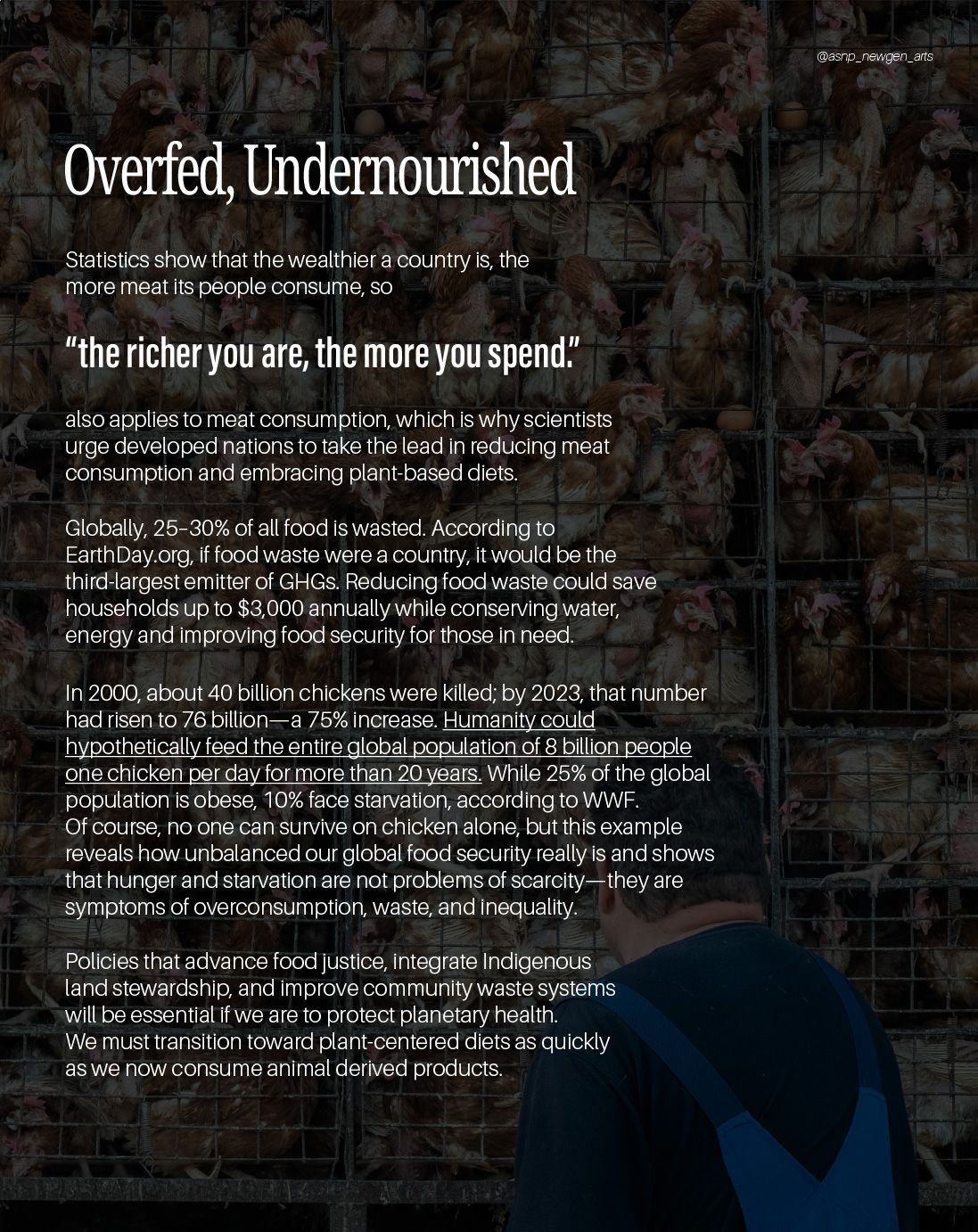
We’ve all heard the saying, “the richer you are, the more you spend.” This also applies to meat consumption. According to an Oxfam report, the richest 10% of people contribute nearly half of global greenhouse gas (GHG) emissions. Statistics show that the wealthier a country is, the more meat its people consume, which is why scientists urge developed nations to take the lead in reducing meat consumption and embracing plant-based diets.
Chickens, the most slaughtered animals worldwide, suffer the most under this demand. In 2000, about 40 billion chickens were killed each year; by 2023, that number had risen to 76 billion—a staggering 75% increase. To put it in perspective: humanity could hypothetically feed the entire global population of 8 billion people one chicken per day for more than 20 years. Of course, no one can survive on chicken alone, but the example reveals how unbalanced our global food security really is. Sheep, the second most slaughtered animals, were killed at a rate of about 600 million per year in 2020, while cows followed at around 200 million annually. This level of production shows that hunger and starvation are not problems of scarcity—they are symptoms of overconsumption, waste, and inequality.
Food waste itself is one of the biggest culprits. According to EarthDay.org, if food waste were a country, it would be the third-largest emitter of GHGs. Globally, 25–30% of all food is wasted. Studies suggest that reducing food waste could save households up to $3,000 annually while conserving water, energy and improving food security for those in need. Meanwhile, to keep up with demand, many farmers are turning to less ethical and sustainable methods. Mark Spencer, a UK farming minister, even suggested the bizarre idea of breeding genetically modified cattle to emit less methane. Why is it easier for us to genetically modify animals to satisfy our appetite for meat than to educate the public on healthier and more sustainable diets? What kind of nutrition can we truly gain from meat that depends on antibiotics, hormones, and chemical manipulation to grow "sustainably" fast enough to reach supermarket shelves—often only to be wasted?
The global market for plant-based alternatives is projected to grow by 19% annually between 2024 and 2030. With this momentum, economic pressures may begin to shift in favor of more sustainable choices. According to WWF, plant-based diets could reduce greenhouse gas emissions by up to 30%, wildlife loss by 46%, and premature deaths by 20%. Policies that advance food justice, integrate Indigenous land stewardship, and improve community waste systems will be essential. Public awareness of the health benefits of plant-based diets—both physical and mental—is increasing each year, giving us hope. Still, if we are to protect planetary health, we must transition toward plant-centered diet as quickly as we now consume animal derived products. Whether by adopting flexitarian, semi-vegetarian, or ideally vegan diets, every reduction matters. Nothing will ever be 100% sustainable, but as individuals and communities, we can start by eating local, asking how our food is produced, and making conscious choices. Even small steps, like participating in the Meatless Monday movement, can help. The world’s habits must change—because the race is on, and if we don’t hurry, the outcome will define our future.
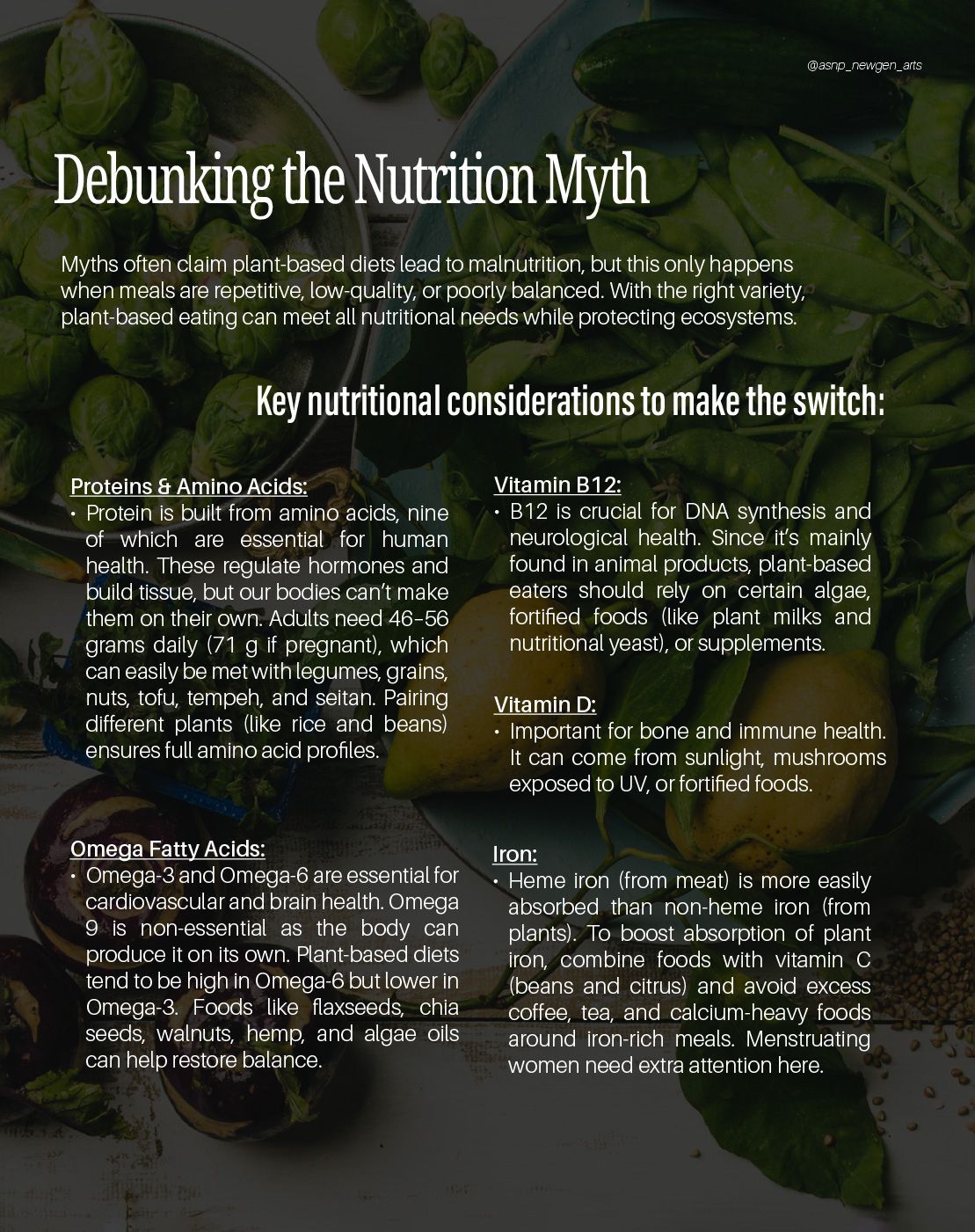
What is a Nutritional Plant-Based Diet:
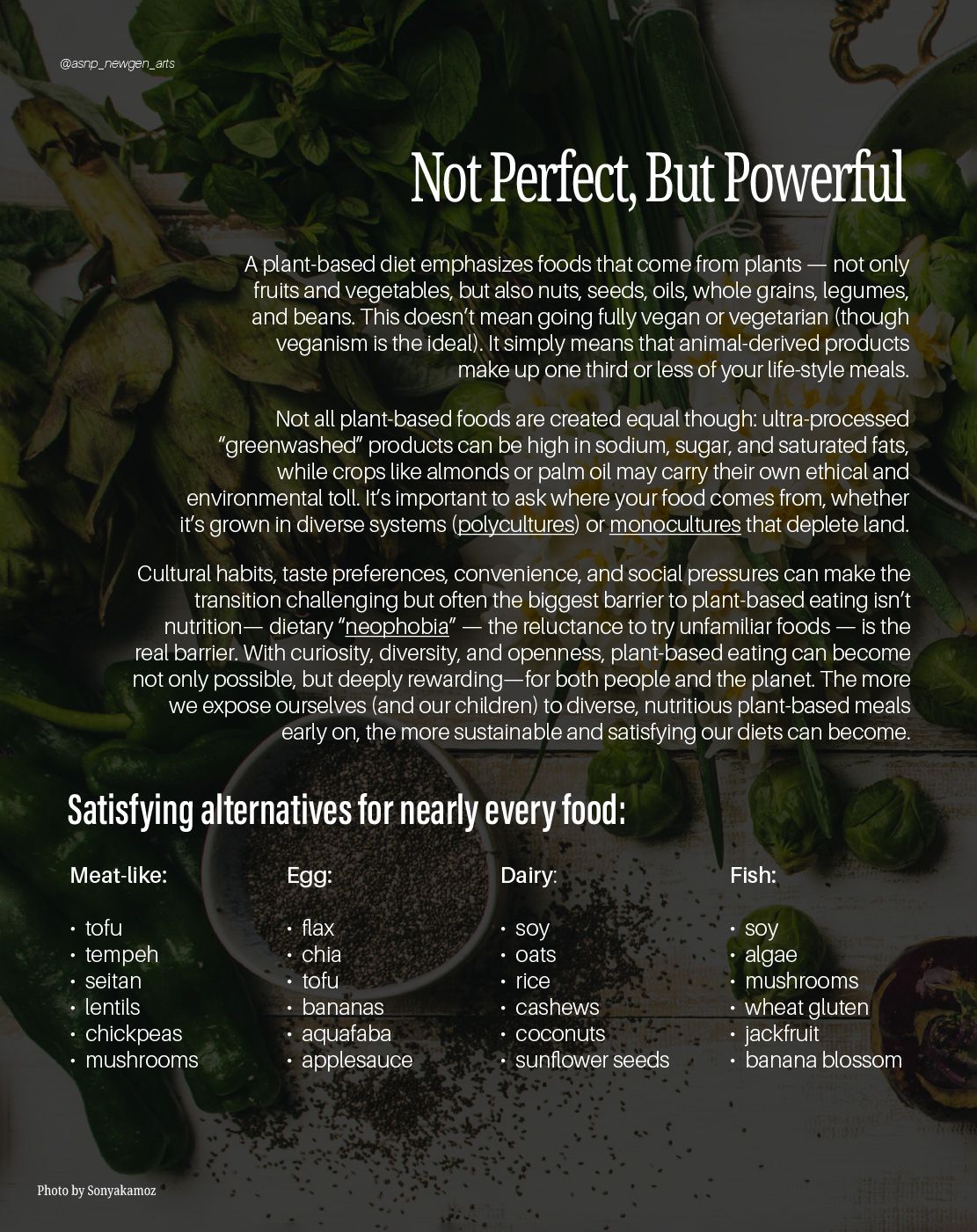
A plant-based diet emphasizes foods that come from plants — not only fruits and vegetables, but also nuts, seeds, oils, whole grains, legumes, and beans. As Harvard University explains, this doesn’t mean going fully vegan or vegetarian (though veganism has the ideal for lowest environmental impact). It simply means that animal-derived products make up a much smaller portion of your meals — ideally one third or less. In fact, many traditional diets, like the Mediterranean diet, are already considered largely plant-based.
The Food and Agriculture Organization warns that 75% of the world relies on just 12 plant species and 5 animal species for food, which reduces biodiversity and can cause nutrient deficiencies. Myths often claim plant-based diets lead to malnutrition, but this only happens when meals are repetitive, low-quality, or poorly balanced. With the right variety, plant-based eating can meet all nutritional needs while protecting ecosystems.
Key nutritional considerations to keep in mind if you are planning to switch to a more environmental friendly diet:
- Proteins & Amino Acids: Protein is built from amino acids, nine of which are essential for human health. These regulate hormones and build tissue, but our bodies can’t make them on their own. Adults need 46–56 grams daily (71 g if pregnant), which can easily be met with legumes, grains, nuts, tofu, tempeh, and seitan. Pairing different plants (like rice and beans) ensures full amino acid profiles.
- Vitamin B12: B12 is crucial for DNA synthesis and neurological health. Since it’s mainly found in animal products, plant-based eaters should rely on certain algae, fortified foods (like plant milks and nutritional yeast), or supplements.
- Vitamin D: Important for bone and immune health. It can come from sunlight, mushrooms exposed to UV, or fortified foods.
- Iron: Heme iron (from meat) is more easily absorbed than non-heme iron (from plants). To boost absorption of plant iron, combine foods with vitamin C (like beans and citrus) and avoid excess coffee, tea, and calcium-heavy foods around iron-rich meals. Menstruating women need extra attention here.
- Omega Fatty Acids: Omega-3 and Omega-6 are essential for cardiovascular and brain health. Omega 9 is non-essential as the body can produce it on its own. Plant-based diets tend to be high in Omega-6 but lower in Omega-3. Foods like flaxseeds, chia seeds, walnuts, hemp, and algae oils can help restore balance.
When carefully planned, plant-based diets lower risks of obesity, diabetes, high blood pressure, cardiovascular disease, and some cancers. They also reduce cholesterol, provide high fiber, and strengthen the gut microbiome. According to WWF, while 25% of the global population is obese and 10% faces starvation, diversifying diets could help address both problems. Shifting away from heavily processed animal meals helps reduce greenhouse gas emissions, protect biodiversity, and preserve fertile soil.
But not all plant-based foods are created equal: ultra-processed “greenwashed” products can be high in sodium, sugar, and saturated fats, while crops like almonds or palm oil may carry their own environmental toll. It’s important to ask where your food comes from, whether it’s grown in diverse systems (polycultures) or monocultures that deplete land.
Beyond meat & dairy, satisfying plant-based alternatives exist for nearly every food:
- Meat-like options: tofu, tempeh, seitan, lentils, chickpeas, mushrooms.
- Dairy alternatives: soy, oats, rice, cashews, coconuts, sunflower seeds.
- Egg substitutes: flax, chia, aquafaba, applesauce, bananas, tofu.
- Fish alternatives: algae, mushrooms, soy, wheat gluten.
Cultural habits, taste preferences, convenience, and social pressures can make the transition challenging but the biggest barrier to plant-based eating isn’t nutrition— dietary “neophobia” — the reluctance to try unfamiliar foods — is often the real barrier. But with curiosity, diversity, and cultural openness, plant-based eating can become not only possible, but deeply rewarding—for both people and the planet. The more we expose ourselves (and our children) to diverse, nutritious plant-based meals early on, the more sustainable and satisfying our diets can become.
Cultural Traditions & Global Perspectives:
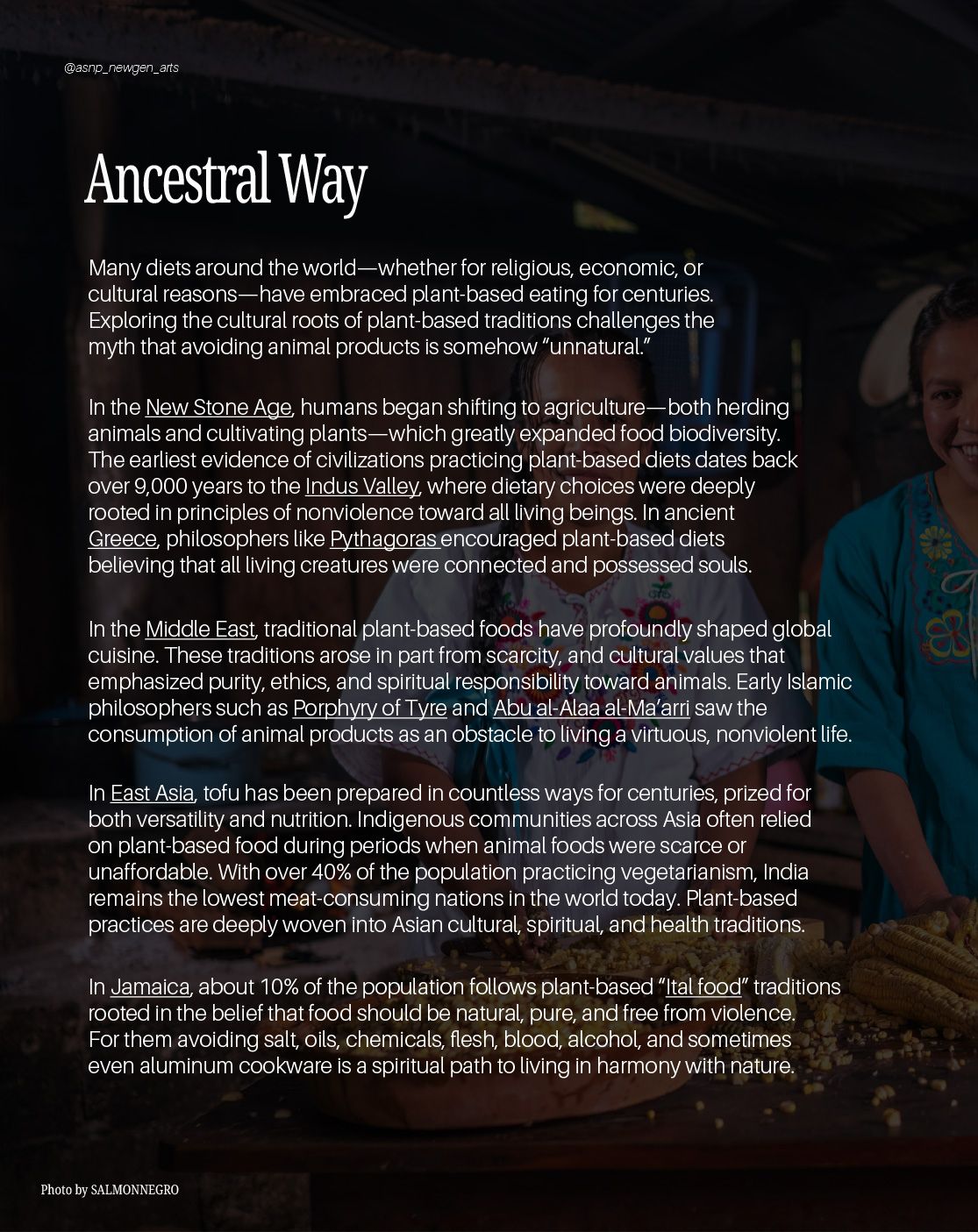
Many diets around the world—whether for religious, economic, or cultural reasons—have embraced plant-based eating for centuries. These diets often relied on wild fruits, seasonal ingredients, and locally available grains, but with the rise of modern food industrialization, the diversity of our plates has narrowed dramatically. Exploring the cultural roots of plant-based traditions challenges the myth that avoiding animal products is somehow “unnatural.”
In the New Stone Age, humans began shifting away from scavenging and hunting, turning instead to agriculture—both herding animals and cultivating plants—which greatly expanded food biodiversity. The earliest evidence of civilizations practicing plant-based diets dates back over 9,000 years to the Indus Valley, where dietary choices were deeply tied to culture and religion, rooted in principles of nonviolence toward all living beings. In ancient Greece, philosophers like Pythagoras encouraged plant-based diets on ethical grounds, believing that all living creatures were connected and possessed souls.
In the Middle East, falafel, hummus, pita bread, tabbouleh, tahini— traditional foods– have profoundly shaped global cuisine. These traditions arose in part from scarcity, where access to animal-derived foods was limited, and also from religious and cultural values that emphasized purity, ethics, and spiritual responsibility toward animals. Early Islamic philosophers such as Porphyry of Tyre and Abu al-Alaa al-Ma’arri argued against the consumption of animal products, seeing it as an obstacle to living a virtuous, nonviolent life.
In the Caribbean more specifically, Jamaica, about 10% of the population follows plant-based diets, many within the Rastafarian “Ital food” tradition—meaning “vital food.” Ital is rooted in the belief that food should be natural, pure, and free from violence, which translates to avoiding salt, oils, chemicals, flesh, blood, alcohol, and sometimes even aluminum cookware. To Rastafarians, eating this way is a spiritual path to living in harmony with nature.
Asia illustrates the extraordinary creativity and diversity possible with plant-based food. In East Asia, tofu has been prepared in countless ways for centuries, prized for both versatility and nutrition. Indigenous communities across Asia often relied on plant-based staples during periods when animal foods were scarce or unaffordable. India today remains one of the lowest meat-consuming nations in the world, with over 40% of the population practicing vegetarianism. In countries such as Japan, China, and Indonesia, diets vary widely by region, but many share a common foundation: plant-based practices are deeply woven into cultural, spiritual, and health traditions.
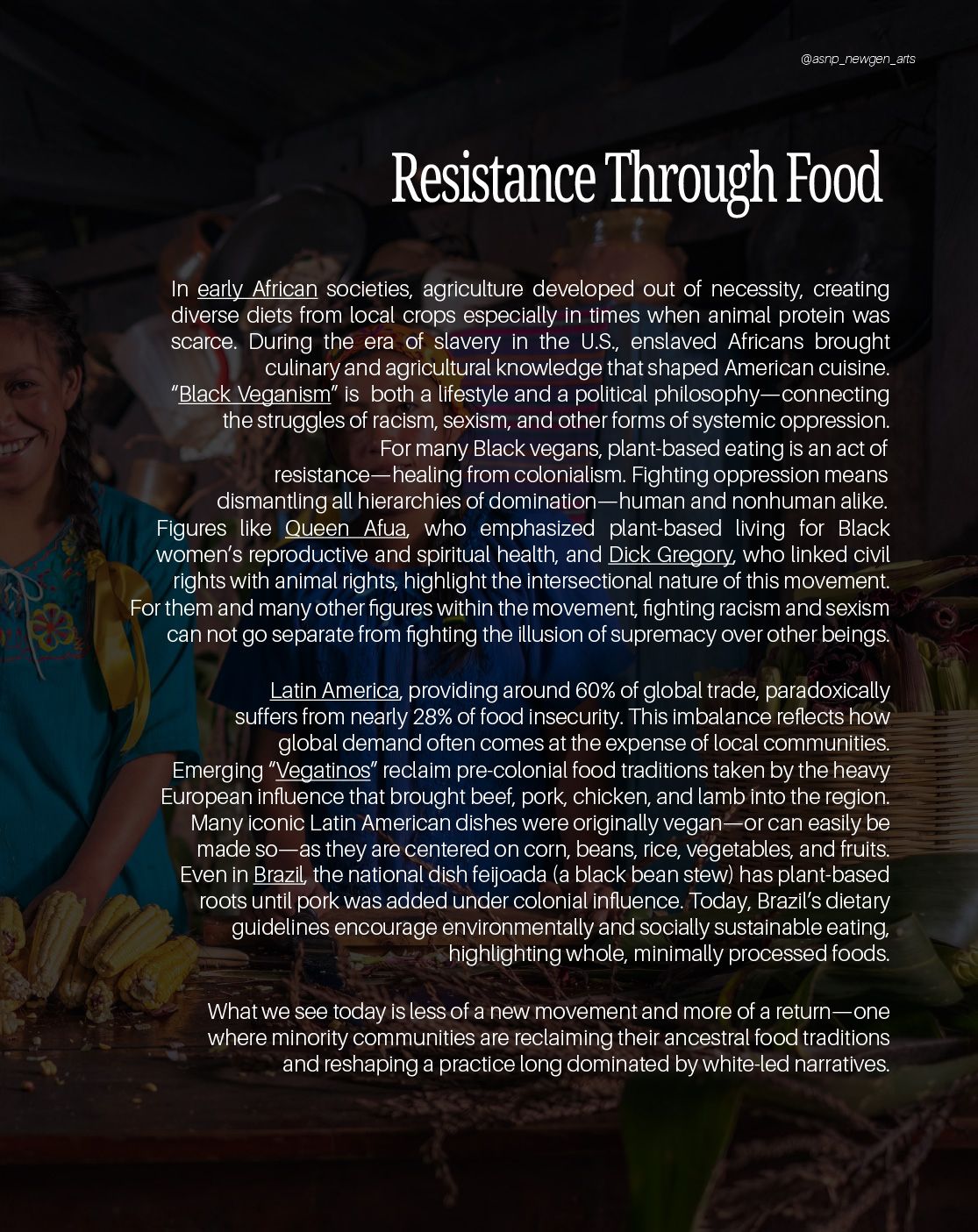
In early African societies, agriculture developed out of necessity, with communities creating diverse diets from local crops—leafy greens, tubers like yams and sweet potatoes, nuts, seeds, and fruits—especially in times when animal protein was scarce.
In Ethiopia and Eritrea, centuries of fasting traditions mean about 40% of the population still practices plant-based eating today.
During the era of slavery in the U.S., African foodways survived through adaptation. Enslaved Africans brought culinary and agricultural knowledge that shaped American cuisine—rice, okra, beans, corn, yams, and greens all trace their significance to these traditions. Today, African American veganism continues that legacy. The Institute for Critical Animal Studies even names “Black Veganism” as both a lifestyle and a political philosophy—connecting the struggle against speciesism with fights against racism, sexism, and other forms of systemic oppression. African Americans are now twice as likely to adopt plant-based diets in comparison to white Americans, making them the fastest-growing demographic in this movement. For many Black vegans, plant-based eating is an act of resistance—healing from colonialist, racist food systems while honoring cultural roots. Figures like Queen Afua, who emphasized plant-based living for Black women’s reproductive and spiritual health, and Dick Gregory, who linked civil rights with animal rights, highlight the intersectional nature of this movement. For them and many other figures within the movement, fighting racism and sexism can not go separate from fighting speciesism as the systematic violence happening is rooted in the illusion of supremacy over other beings. A supremacy that started with a colonialist philosophy that still haunts our society. Unfortunately a majority of white vegans in the US fail to relate to the intersectional political causes. For many black vegans, choosing this lifestyle is an act of resistance against racist governmental health and food justice policies. Fighting oppression means dismantling all hierarchies of domination—human and nonhuman alike.
Latino America is one of the largest food-exporting regions in the world, providing around 60% of global trade, yet paradoxically, nearly 28% of its people face food insecurity. This imbalance reflects how global demand for meat and export exotic crops often comes at the expense of local communities. In response, many Latin Americans are reviving plant-based traditions as a way to fight hunger and reconnect with cultural heritage and is visible in emerging terms like “Vegatinos” among younger generations, reclaiming pre-colonial food traditions in contrast to the heavy European influence that brought beef, pork, chicken, and lamb into the region. Many iconic Latin American dishes were originally vegan—or can easily be made so—since they are centered on corn, beans, rice, vegetables, and fruits. In Brazil, even the national dish feijoada (a black bean stew) has plant-based roots before pork was added under colonial influence. Today, Brazil’s dietary guidelines encourage environmentally and socially sustainable eating, highlighting whole, minimally processed foods—a reminder that plant-based eating in Latin America is less a trend and more a return to Indigenous food wisdom.
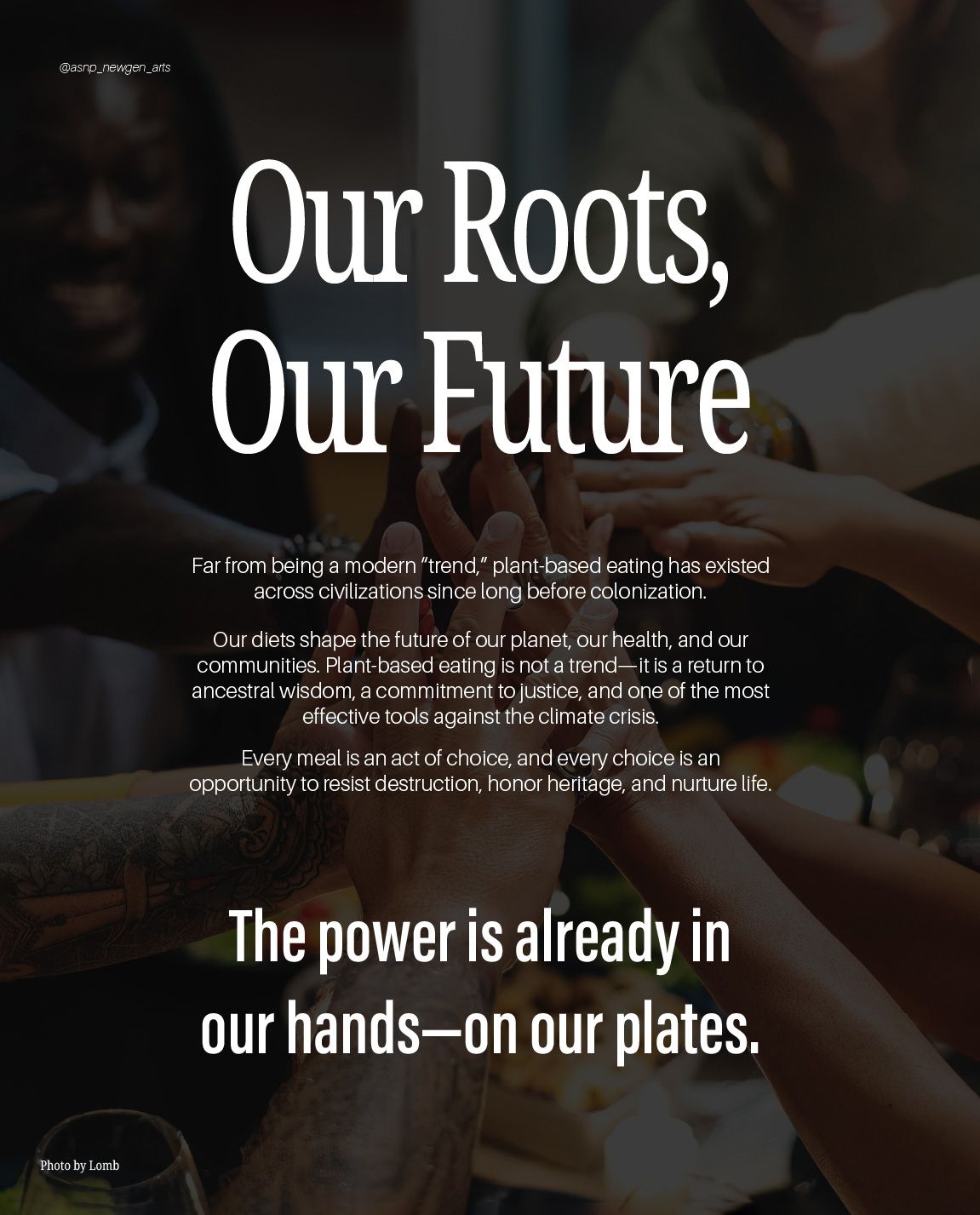
Far from being a modern “trend,” plant-based eating has existed across civilizations since long before colonization. What we see today is less of a new movement and more of a return—one where minority communities are reclaiming their ancestral food traditions and reshaping a practice long dominated by white-led narratives.

References:
http://earthday.org
https://faunalytics.org/global-animal-slaughter-statistics-and-charts/
https://www.epa.gov/recycle/preventing-wasted-food-home
https://www.weforum.org/stories/2021/02/plant-based-diet-biodiversity-report/
https://planetbaseddiets.panda.org/
https://www.earthday.org/un-report-plant-based-diets-provide-major-opportunities-to-address-climate-crisis/
https://www.medsci.ox.ac.uk/news/vegan-diet-has-just-30-of-the-environmental-impact-of-a-high-meat-diet-major-study-finds
https://www.eatingwell.com/article/8060938/live-longer-fight-climate-change-eat-more-plants/
https://en.wikipedia.org/wiki/Nutritional_biodiversity
https://veganoutreach.org/environment/
https://tracextech.com/plant-based-diets/
https://pmc.ncbi.nlm.nih.gov/articles/PMC9024616
https://www.theguardian.com/environment/2023/jul/20/vegan-diet-cuts-environmental-damage-climate-heating-emissions-study
https://www.theguardian.com/environment/2024/mar/27/flexitarian-diets-global-warming-climate-change
https://en.wikipedia.org/wiki/Individual_action_on_climate_change
https://www.sierraclub.org/sierra/2017-2-march-april/feature/cafo-industrys-impact-environment-and-public-health
https://www.opinionstage.com/page/342466f0-e4ec-4c65-82ce-9127c30dd8c7
https://pmc.ncbi.nlm.nih.gov/articles/PMC7912826
https://www.verywellhealth.com/incomplete-protein-8612939
https://www.health.com/vegan-7256901
https://jn.nutrition.org/article/S0022-3166%2823%2906589-6/fulltext
https://en.wikipedia.org/wiki/Food_biodiversity
https://www.thetimes.com/uk/science/article/vegetarian-and-vegan-diets-cut-cancer-risk-by-up-to-a-quarter-j937m6lff?region=global
https://en.wikipedia.org/wiki/Veganism
https://en.wikipedia.org/wiki/Plant-based_diet
https://www.newrootsinstitute.org/articles/a-brief-history-of-plant-based-diets
https://americasquarterly.org/article/solving-latin-americas-food-paradox/
https://www.middleeastvegansociety.org/blog/the-historical-roots-and-philosophical-advocacy-of-plant-based-diets-in-the-middle-east
https://jamaicans.com/ital_food/
https://foodrevolution.org/blog/plant-based-cultures-and-cuisines/
https://cruelty.farm/the-global-perspective-on-veganism-how-different-cultures-embrace-plant-based-eating/
https://www.bonappetit.com/story/alicia-kennedy-no-meat-required
https://www.foodandwine.com/native-american-cuisine-new-mexico-8679060
https://en.wikipedia.org/wiki/Black_veganism
https://en.wikipedia.org/wiki/Vegetarianism_and_veganism_in_China
https://oldwayspt.org/explore-heritage-diets
https://www.reddit.com/r/Cooking/comments/tvbgj0/naturally_veganvegetarian_foods_in_your_culture